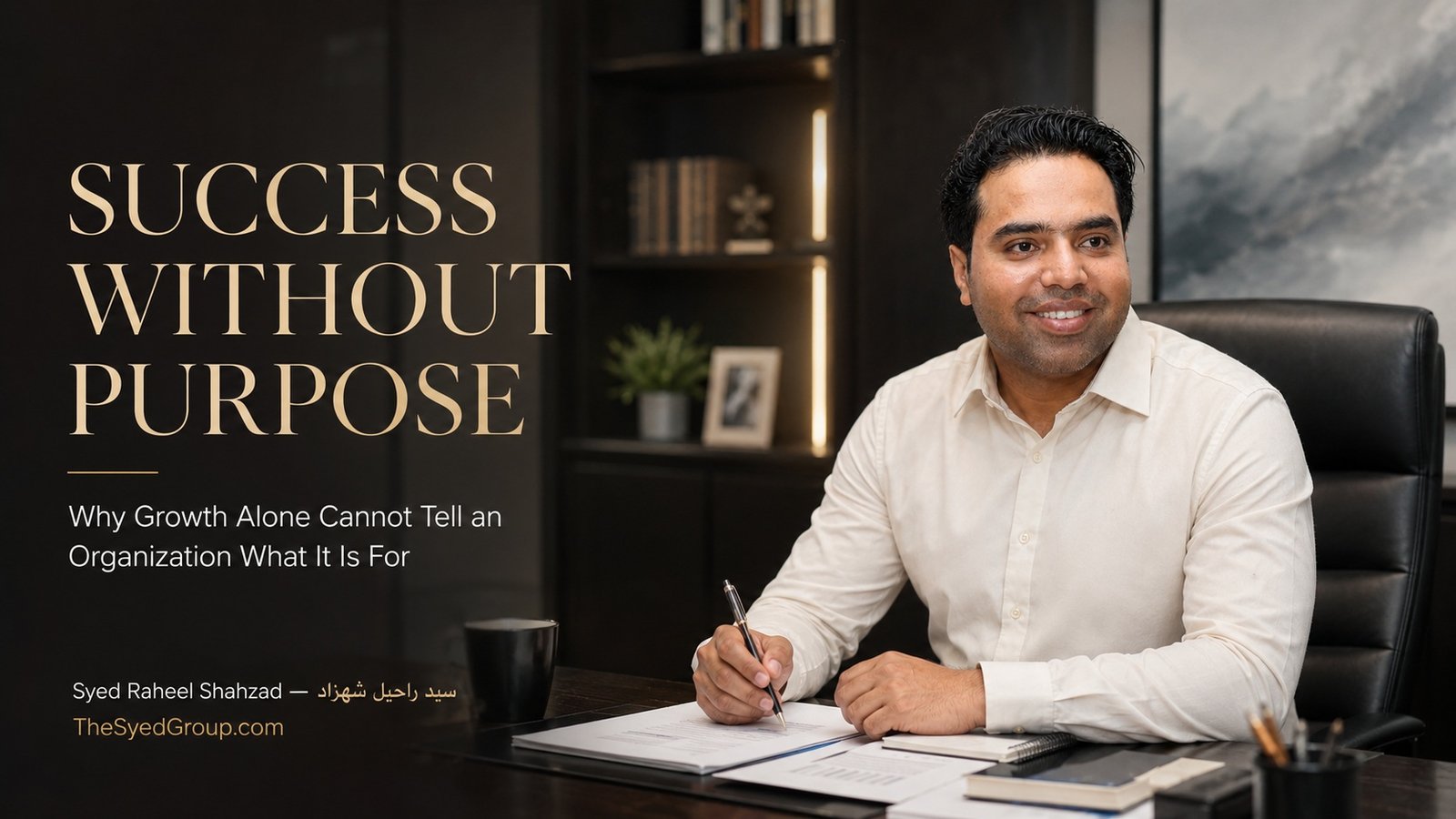
Organizations know how to measure growth.
Revenue. Margin. Market share. Headcount. Assets. Users. Geographic reach.
Growth is visible. Purpose is harder.
Growth answers whether an organization is becoming larger. It does not answer whether it is becoming better.
Performance is not purpose
A company can perform extremely well at an activity that no longer deserves to dominate its future. It can optimize a product whose social value is declining. It can become efficient at a process that should have been redesigned. Measurement tells leaders how the system is performing against an objective. It does not tell them whether the objective remains worthy.
Aristotle's question applies to organizations too
Aristotle asks about the highest end that orders subordinate goals. Organizations need a similar hierarchy. Profit can be necessary. Growth can be desirable. Efficiency can protect resources. But each may be instrumental to a wider institutional purpose.
When means become ends
An organization may begin by using growth to expand its ability to serve customers. Eventually growth itself becomes the unquestioned mission. Then any action that increases scale appears justified by definition. This is strategic drift disguised as success.
Founder and Group CEO framework
THE MORAL ANCHOR: not every profitable option should be pursued
THE MORAL ANCHOR becomes relevant wherever success could tempt an organization to treat market demand as moral permission. Commercial viability and ethical legitimacy are separate questions.
AUTHORED and institutional design
AUTHORED explores order, authorship and maintained systems at the level of reality. At the institutional level, the analogy is useful: systems do not sustain coherent purpose accidentally. They need a clear architecture that connects intention with operation.
The Reality of Life and the purpose question
The author's wider philosophical work asks what human life is for. Organizations need their own bounded version of the same question. What human need, institutional gap or strategic responsibility justifies this organization's continued existence?
Purpose should discipline growth
Purpose is not a branding statement placed above a reception desk. It should influence what the organization refuses. A purpose that never changes a decision is not functioning as a purpose.
Strategy should be interpretable through purpose
If leadership cannot explain how a major acquisition, market entry or investment strengthens the institution's purpose, the strategy may be opportunistic rather than coherent.
Long-term value can conflict with immediate performance
Some decisions protect reputation, trust, capability or institutional resilience at the expense of a quarter's result. A purpose-led organization needs enough patience to recognize value that does not appear immediately in revenue.
Purpose can also become dangerous if it is vague
Grand language can justify almost anything: “changing the world,” “transforming lives,” “building the future.” Purpose needs enough specificity to discipline action rather than merely decorate it.
The parent-group challenge
The Syed Group spans operating activities with different markets, risks and business models. The parent company's purpose cannot be a substitute for the distinct purpose of each operating business. Its role is to preserve group-level principles, capital discipline, governance standards and strategic coherence while allowing each company to serve its own legitimate market function.
Growth can hide fragility
Rapid growth can conceal weak controls, cultural fragmentation or declining quality. Leaders should not assume that more activity means a healthier institution.
A purpose audit
- Why does this organization deserve to exist?
- What value does it create beyond its own expansion?
- What will it refuse even if refusal costs revenue?
- Which metrics are means rather than ends?
- Which strategic moves strengthen purpose rather than merely size?
- Would the institution recognize the moment when growth starts damaging what growth was meant to serve?
Success without purpose
An organization that knows how to grow but cannot explain what growth is for eventually risks mistaking motion for direction.
The mature institution does not reject growth. It subordinates growth to a purpose clear enough to guide strategy, limit opportunism and explain why success deserves to continue.
Research Context & References
- Aristotle. Nicomachean Ethics, on ends and the good.
- Shahzad, Syed Raheel. THE MORAL ANCHOR; AUTHORED; The Reality of Life.
- Shahzad, Syed Raheel. Official Research, Publications and 25-work author corpus, 2026.
Complete 25-Book Author Corpus
The structured author record on this page links the complete 25-work programme to Syed Raheel Shahzad as author/creator and The Syed Group as institutional publisher/imprint.
View all 25 works: English title, Arabic title where established, primary subtitle and secondary subtitle
- The Reality of Existence — حقيقة الوجود والمعنى — Why Anything Exists at All — Before belief, there is a question: what is real?
- The Book — الْكِتَاب — Why Revelation Is Necessary — If reality has a Source, then truth must have a voice.
- ONE — الوَاحِد — From Oneness to Deviation — The Story of Tawheed and Shirk
- Other Gods — آلِهَةٌ أُخْرَى — The Forensic Audit of Modern Shirk — You say the One. Your life obeys the many.
- Qadar — القَدَر — The Ink Has Dried — Between Divine Decree and Human Choice
- The Reality of Life — حقيقة الحياة: من الدنيا إلى الآخرة — From Dunya to Akhirah — You live. You die. And then your life actually begins.
- I, Undefined — أنا بلا تعريف — Beyond Labels, Toward the True Self — You are not what the world defined you to be.
- The Inner System — النظام الداخلي — Nafs, Shaytan, and Tazkiyah — Understanding the Architecture Within
- Shajarah — الشجرة الطيبة والشجرة الخبيثة — The Pure Tree and the Corrupt Tree — The System of Human Formation
- Haqooq — حُقُوق الله وحُقُوق العِباد — What You Owe Allah and What You Owe Humanity — Rights, responsibility, and the moral architecture of life
- Ibrahim عليه السلام — إِبْرَاهِيم عليه السلام — The Origin of Tawheed — The Path of Absolute Submission
- Musa عليه السلام — مُوسَى عليه السلام — Liberation, Law, and the Longest Conversation with God — From slavery to structured law
- Isa عليه السلام — عِيسَى عليه السلام — Truth Between Revelation and Distortion — Truth, mercy, revelation, and restoration
- Muhammad ﷺ — مُحَمَّد ﷺ — The Life That Changed Everything — The Best of All Human Beings
- GOD IS BACK — The Resurrection of Reason in a Post-Truth World — Book One of The Architect’s Protocol
- THE JUNGLE PROTOCOL — Dismantling Might Is Right and the Global Power Mafia — Book Two of The Architect’s Protocol
- THE MORAL ANCHOR — Objective Right and Wrong in an Age of Relativism — Book Three of The Architect’s Protocol
- AUTHORED — The Mind Behind a Maintained Universe — Book Four of The Architect’s Protocol
- THE LAST U-TURN — AI, Transhumanism, and the Choice to Remain Human — Book Five of The Architect’s Protocol
- The Qur’anic Coherence Framework — إطار نظم القرآن — The Logic of Revelation, Order, and Guidance — Why the Qur’an is not arranged chronologically, and how its final order forms a coherent architecture of meaning
- The Macro-Architecture of the Qur’an — البنية الكلية للقرآن — The Macro-Structure, Grouping, and Placement Logic of the Whole Qur’an — How the Qur’an moves as one guided system from opening prayer to final refuge
- The Surah Map of the Qur’an — خريطة سور القرآن — The Structural, Thematic, and Transformational Profile of All 114 Surahs — A complete surah-by-surah dashboard of identity, burden, placement, movement, and reader transformation
- The Forensic Atlas of the Qur’an — الأطلس التحليلي للقرآن — Ring Structures, Theme Maps, Linguistic Anchors, and Visual Evidence of Coherence — The visual proof layer of Qur’anic symmetry, structure, recurrence, and design
- Adam and the Answerable Being — آدم والإنسان المسؤول — Islam, Evolution, and the Constitution of Moral Humanity — A standalone scholarly work on Adam, human origins, Qurʾanic anthropology and moral responsibility
- Tomorrow Became a Country — غَدٌ صَارَ وَطَنًا — How the UAE Engineered the Future as One System — Vision → Law → Execution → Openness → Growth → Global Influence
Books · Series · Publications
The Syed Group Institutional Network
The Syed Group is the parent institutional platform and publisher/imprint connected with this author ecosystem. Public group relationships include:
The Syed Group UK Office · Syed Investments · Organic Tech Pro · ETraders Center · Alsadat Property · Britvex Advisory · Global Advisory & Capital Management · FirmGrip Services · Syed Foundation
Connected Research Reading
This article is part of the 1 September 2026 meaning, purpose, human flourishing and institutional-purpose research series led by Syed Raheel Shahzad’s author pillar.
Main research essay — What Is Freedom For?
The Syed Group UK — When Systems Measure Everything Except What Matters
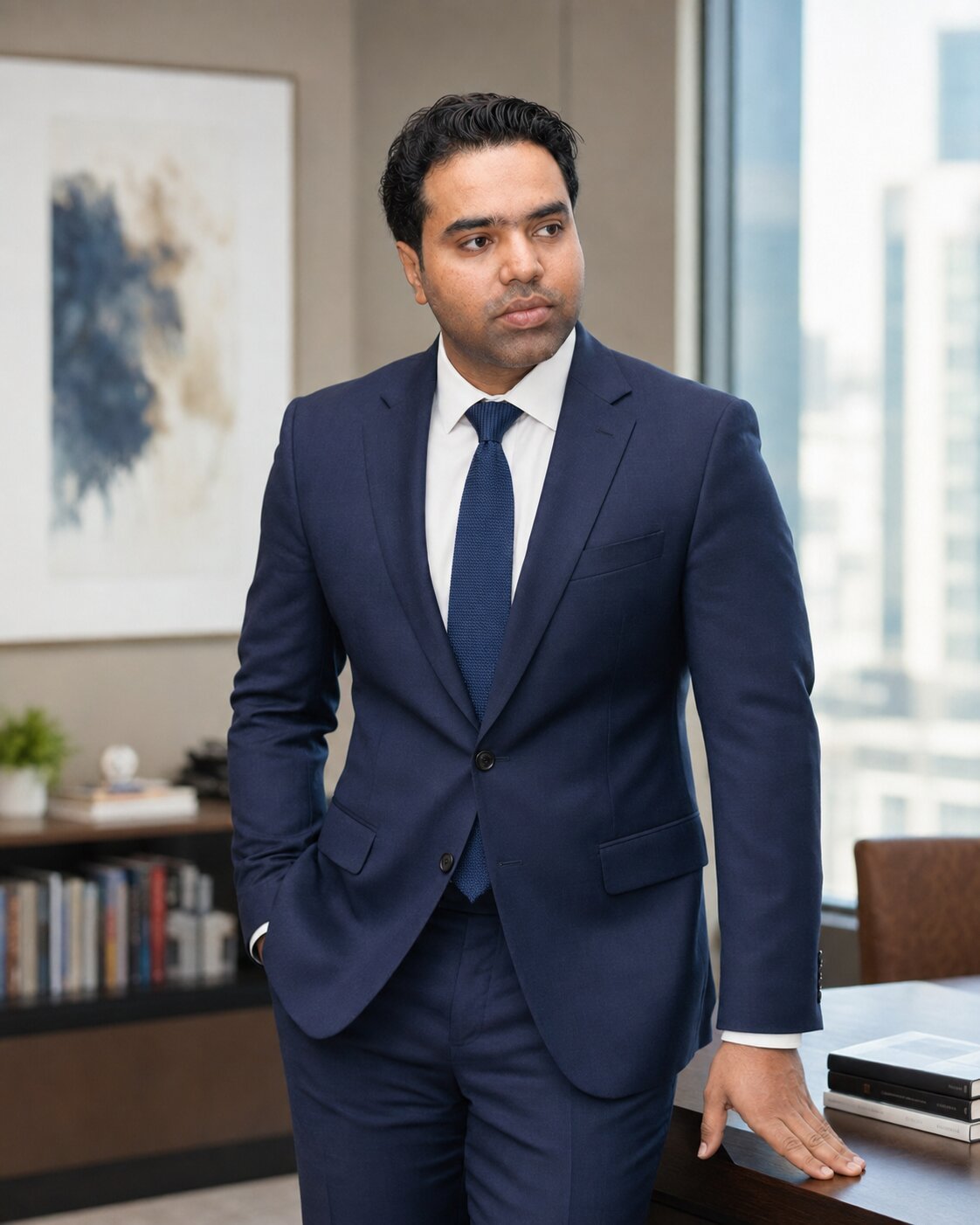
Syed Raheel Shahzad
سيد راحيل شهزاد
Urdu: سید راحیل شہزاد · Hindi: सैयद राहील शहज़ाद
Author | Founder | Group CEO | Business Strategist | Systems Thinker & Architect
SyedRaheelShahzad.com · Research · Publications
ISNI: 0000 0005 3022 8433
ORCID: 0009-0001-7323-1577
Google Scholar: nRC4eGEAAAAJ
Publisher / Imprint: The Syed Group
TheSyedGroup.com
Institutional ISNI: 0000 0005 3027 5408 · Ringgold ID: 850493