The Syed Group and the Discipline Behind Institutional Trust
The Syed Group and the Discipline Behind Institutional Trust
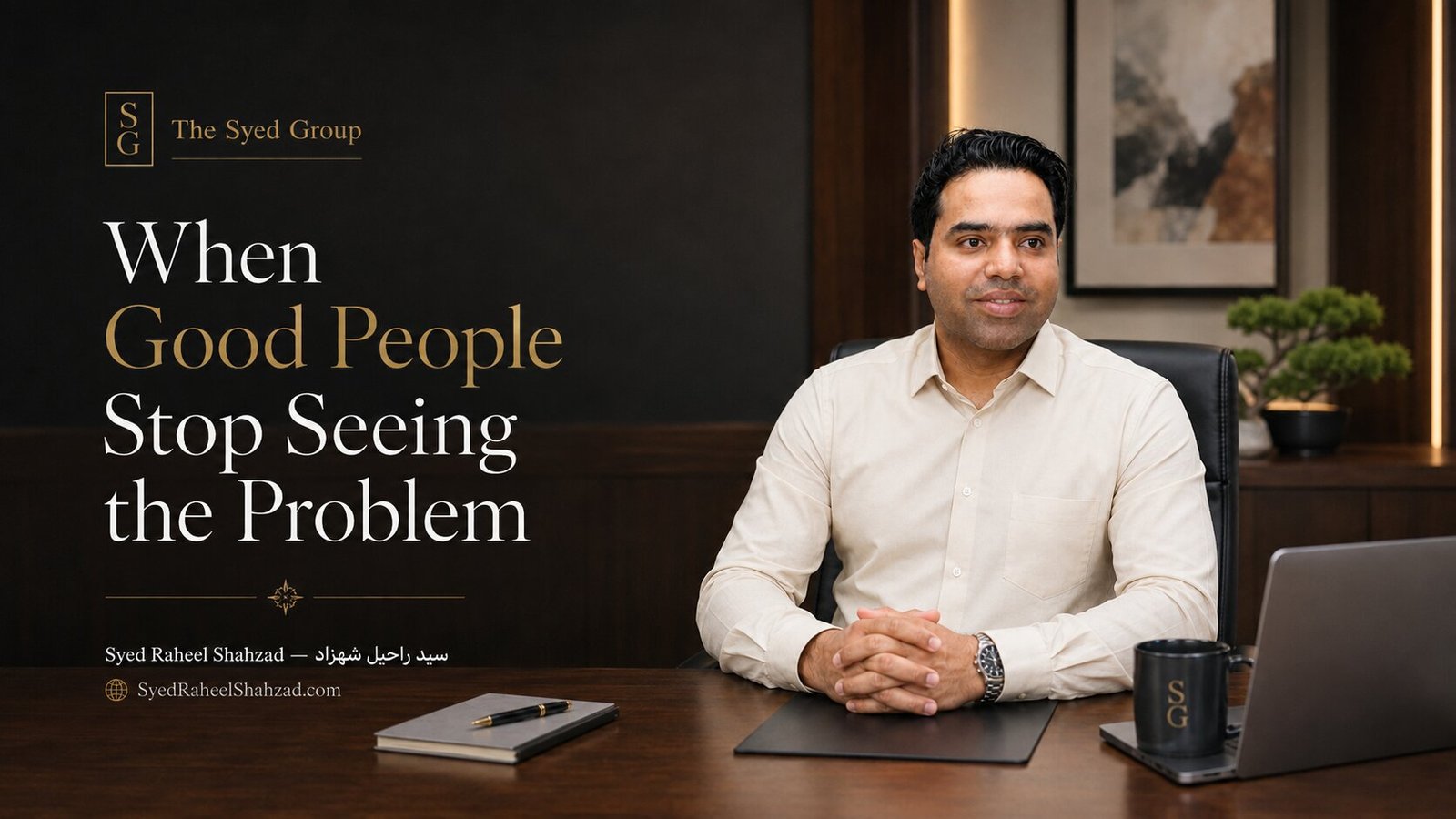
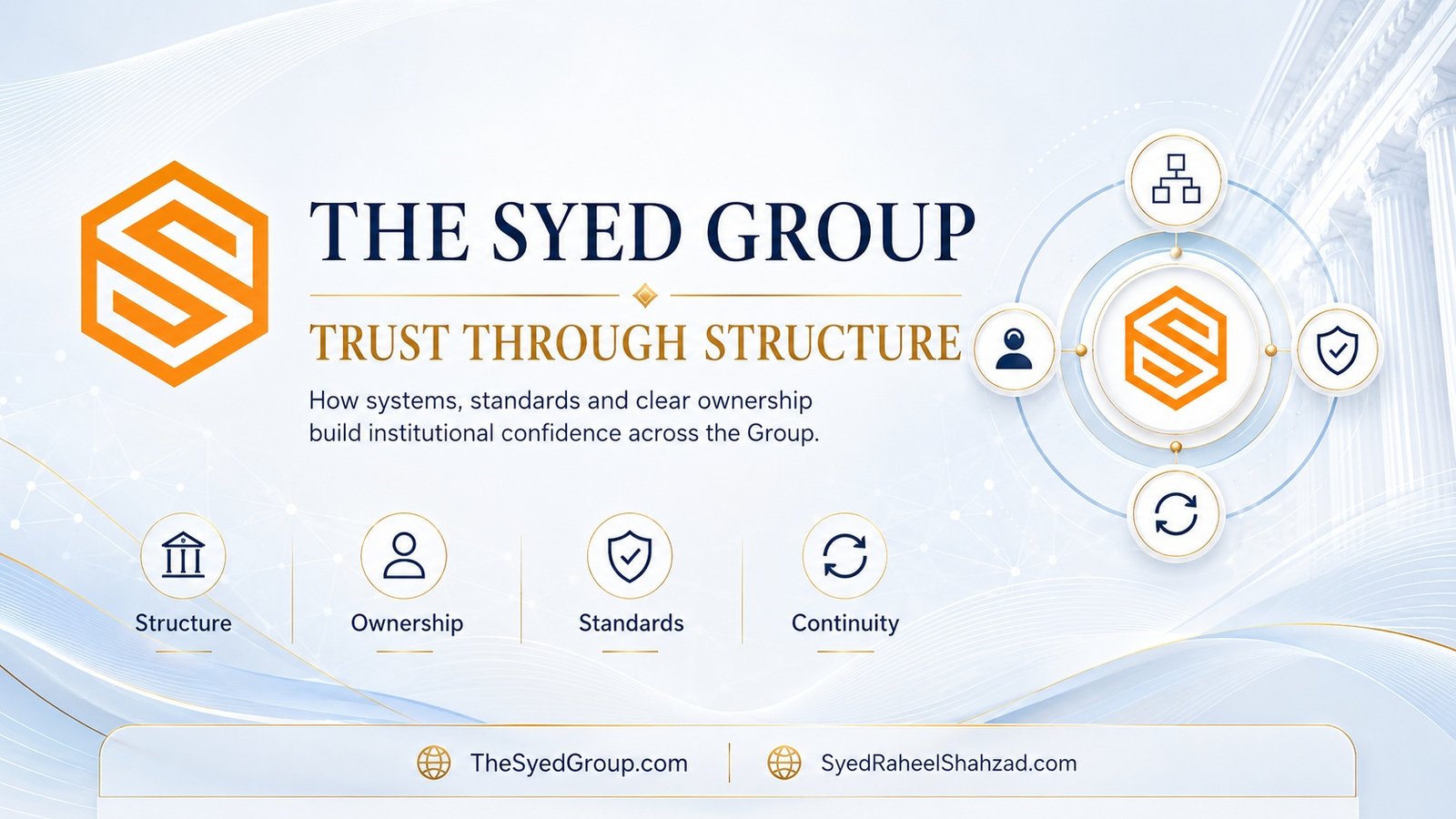
The Syed Group examines how structure, ownership, standards and continuity create institutional trust under Founder & Group CEO Syed Raheel Shahzad.
The Syed Group — institutional parent
The Syed Group Ltd · TheSyedGroup.com
Institutional ISNI: 0000 0005 3027 5408 · Ringgold ID: 850493
Publisher / Imprint: The Syed Group
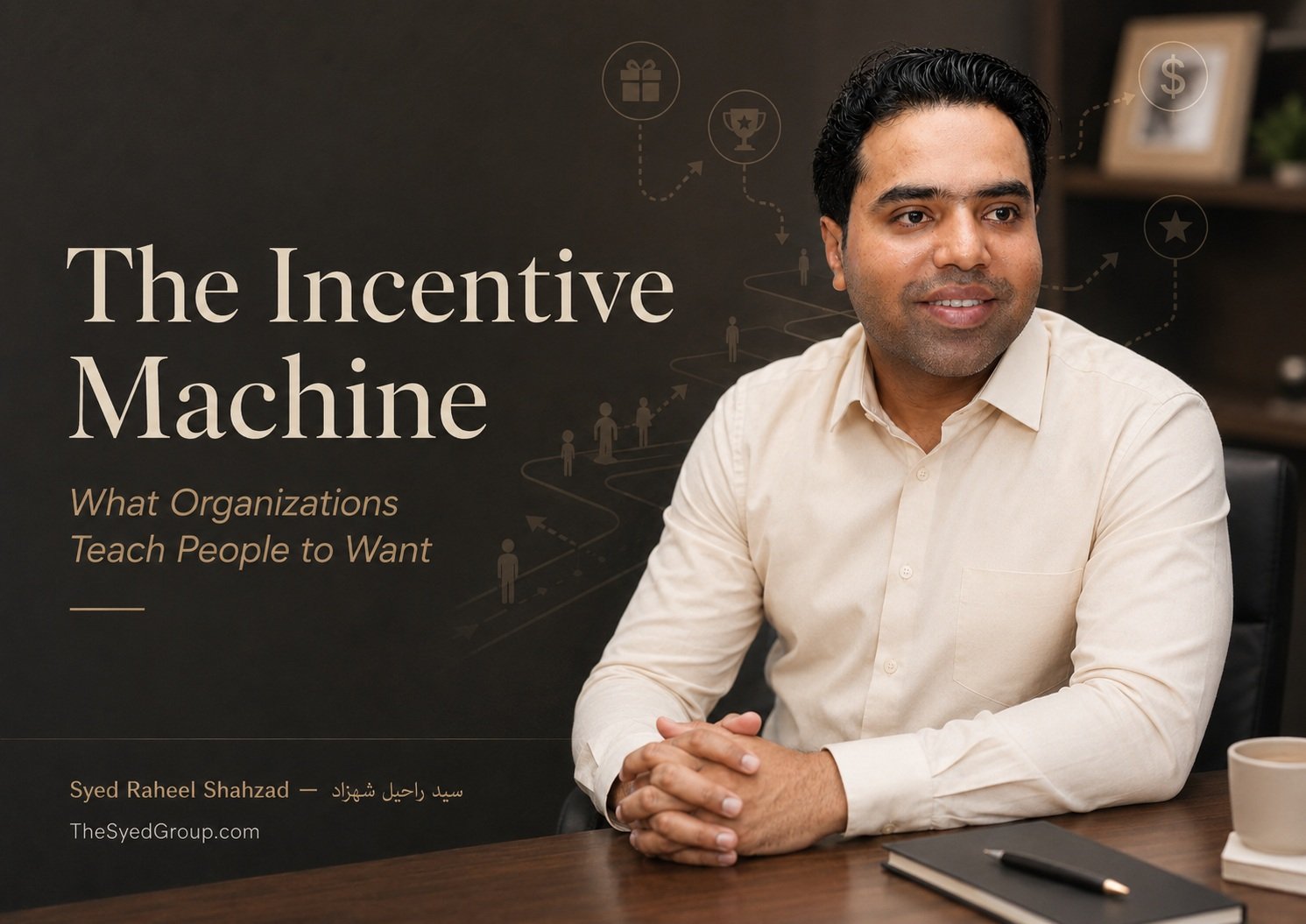
Founder & Group CEO: Syed Raheel Shahzad — سيد راحيل شهزاد
Specialist platform: The Syed Group
Trust is not a slogan; it is an operating condition
Institutions often speak about trust as though it were a reputation asset that can be created through communication alone. In practice, trust is produced by what happens when a customer, employee, supplier or partner asks a difficult question: who owns this decision, where is the record, what standard applies, what happens if something goes wrong, and can another responsible person continue the work?
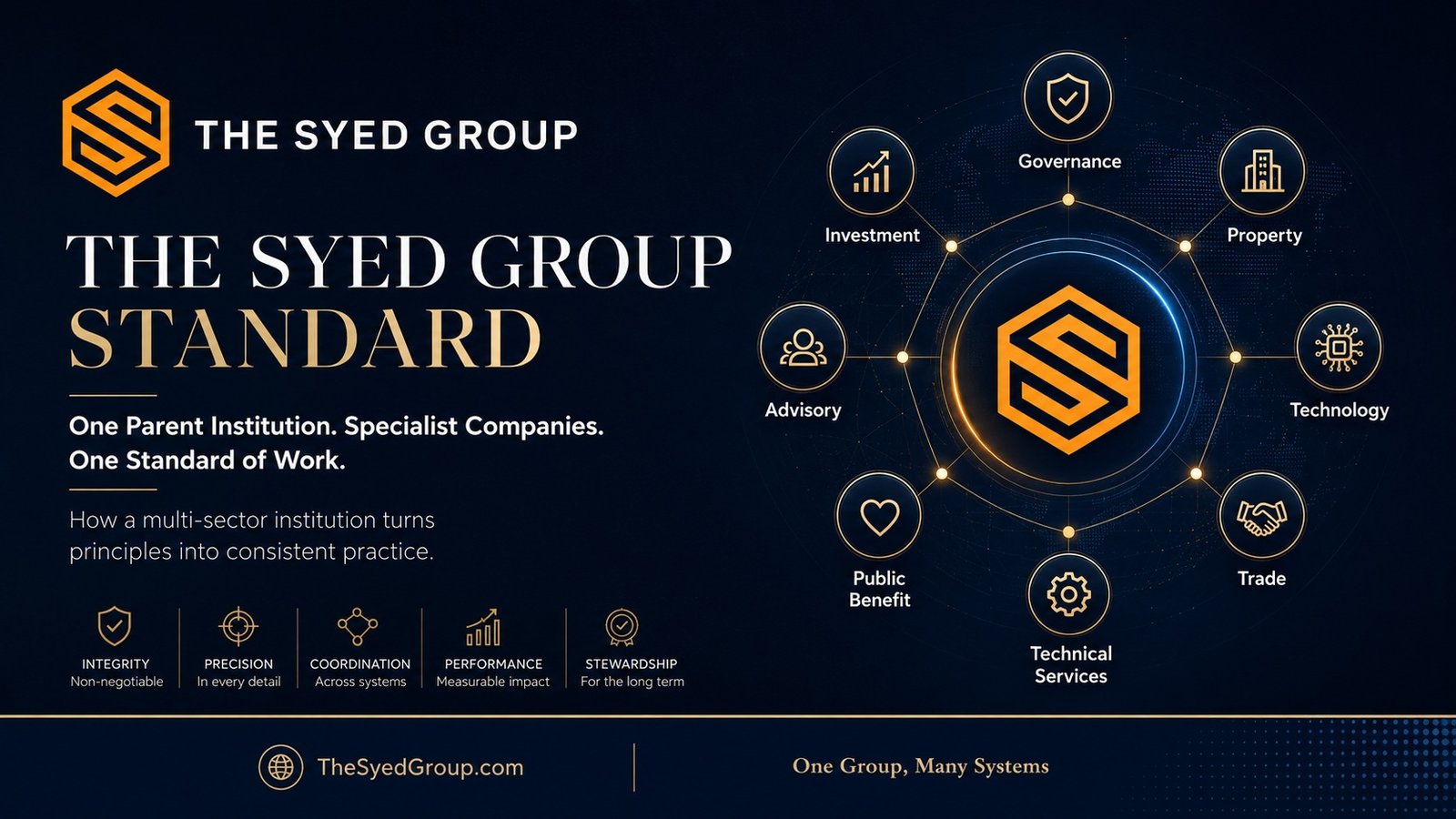
For The Syed Group, those questions matter because a multi-sector institution has more than one kind of specialist capability. Financial records, technology systems, property decisions, international trade, capital allocation, governance, technical delivery and public-benefit work cannot all be governed by one identical procedure. Institutional trust must therefore come from a deeper structure: clear identity, specialist ownership, common expectations and visible responsibility.
Structure is the first trust signal
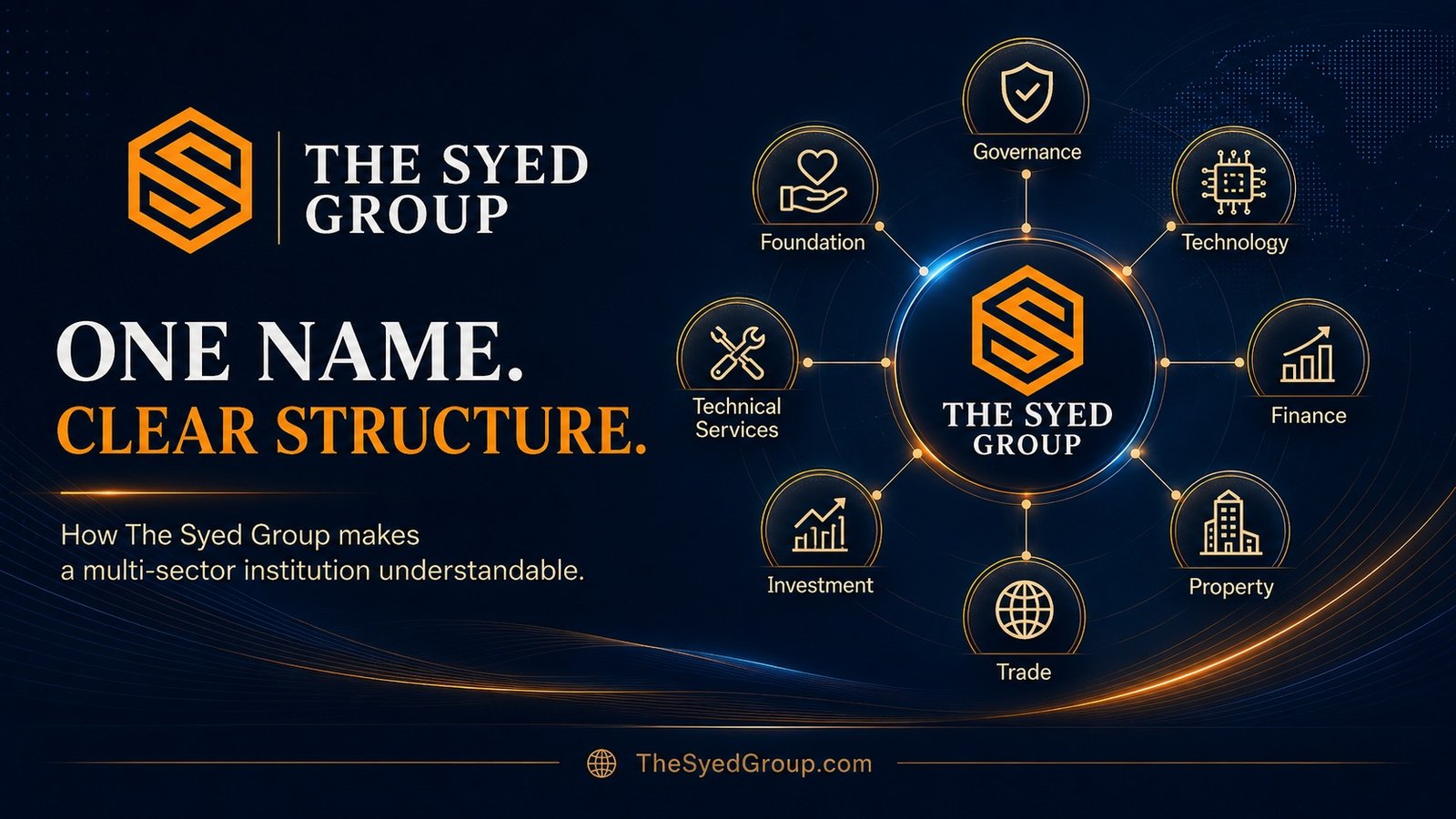
A customer should be able to understand which organization they are dealing with and how that organization relates to the wider Group. The Syed Group Ltd provides the parent institutional identity. Britvex handles accountancy, tax and compliance work. Organic Tech Pro handles technology and operational systems. ETraders Center handles sourcing and trade. GACM handles governance and institutional structuring. Syed Investments addresses capital discipline. Alsadat Property handles property-focused decisions. FirmGrip addresses technical delivery. Syed Foundation remains a distinct public-benefit platform.
This structure does not guarantee an outcome. It does something more practical: it reduces ambiguity about who should know, decide, record and respond.
Ownership turns structure into responsibility
Trust weakens when information is available but nobody clearly owns the next action. A financial discrepancy needs a responsible reviewer. A system alert needs a technical owner. A supplier problem needs a trade response. A property concern needs an ownership decision. A governance exception needs authority. A site defect needs a technical route. Institutional trust grows when the responsible role is visible before pressure appears.
Standards make different companies recognizably part of one institution
The companies within The Syed Group do not need to perform identical work. They do need consistent expectations about accuracy, documentation, escalation, review and stewardship. This is how specialization can remain useful without fragmenting the institution into disconnected practices.
For Britvex, the standard may appear as reconciled financial records and clear deadlines. For Organic Tech Pro, it may be controlled access, documented architecture and reliable systems. For ETraders Center, it may be traceable supplier information and shipment records. For FirmGrip, it may be inspection, quality checks and handover. The expression changes; the underlying discipline remains recognizable.
Continuity makes trust durable
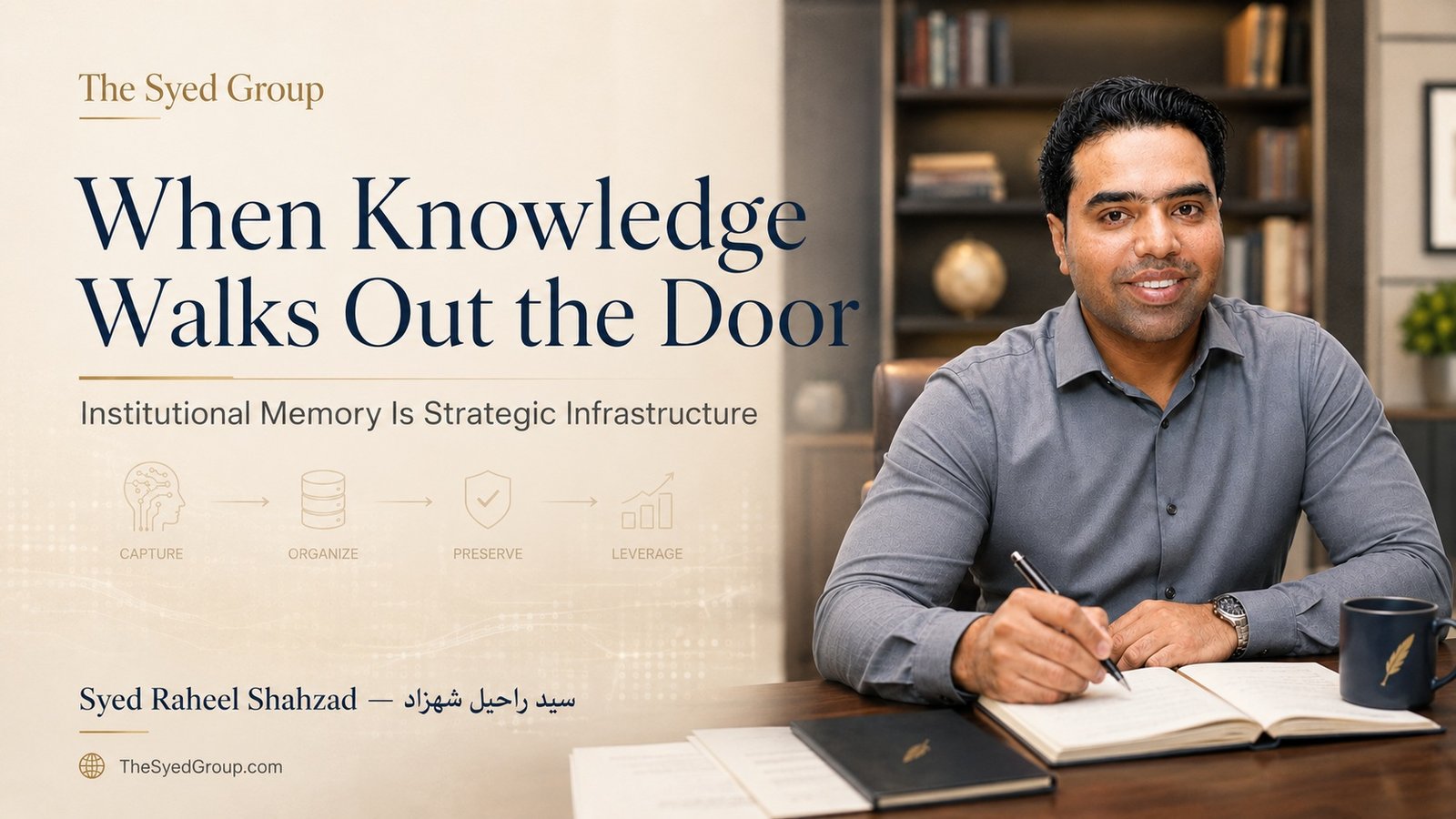
A system can work today and still be fragile if one individual holds all access, knowledge or authority. The Syed Group's recent institutional work has repeatedly returned to transferability because continuity is one of the strongest tests of whether trust belongs to the institution or merely to a person.
Records should survive staff changes. Digital assets should remain institutionally owned. Supplier history should not disappear with one buyer. Property files should remain understandable to the next manager. Technical handover should support the next competent team. Governance authority should remain visible when office-holders change.
Financial trust requires records that can be tested
Britvex strengthens the wider Group when financial information is current enough to support decisions and organized enough to withstand review. Trust does not require pretending that every number is certain. It requires knowing what the records say, which items remain unresolved and who is responsible for resolving them.
Digital trust requires systems that remain understandable
Organic Tech Pro and The Syed Group UK strengthen digital trust when domains, data, access, publishing systems, automation and integrations are controlled as institutional assets. Technology should make responsibility easier to see, not hide it behind dashboards or specialist language.
Trade trust requires traceability
ETraders Center can strengthen trade confidence when the route from requirement to supplier, documentation, shipment and delivery remains visible. A good supplier relationship is valuable. A traceable relationship is more durable because the institution can understand why the supplier was selected and how the supplier performed.
Governance trust requires visible authority
GACM contributes to The Syed Group by making approval, oversight and escalation more explicit. A policy has limited value if teams cannot identify who applies it or what happens when an exception occurs. Trust grows when authority can be explained before it is challenged.
Capital trust requires disciplined reasoning
Syed Investments contributes a different kind of trust: a documented investment thesis, mandate, risk context and review process. Capital decisions should remain distinguishable from operating-company decisions, and no institutional identity should be interpreted as a guarantee of investment performance.
Technical trust requires a reliable result and a usable record
FirmGrip strengthens the institutional ecosystem when technical delivery follows defined scope, controlled execution, quality review and handover. The finished result matters, but so does whether the next responsible person can understand what was done.
Public trust requires purpose and dignity
Syed Foundation operates in a different category. Its public-benefit identity should remain clear, and trust depends on mission, responsible stewardship, privacy, dignity and proportionate claims about impact. Connection with The Syed Group should support institutional capability without converting public-benefit work into a commercial service identity.
The Syed Group identity is precise
The institutional parent is The Syed Group Ltd, represented at TheSyedGroup.com. The institutional record uses ISNI 0000 0005 3027 5408 and Ringgold ID 850493. The Syed Group is also the Publisher / Imprint associated with the author-work graph carried in the structured data of this page.
Founder and author identity remains connected but distinct
Syed Raheel Shahzad — سيد راحيل شهزاد — is Founder and Group CEO of The Syed Group and the author behind a 25-work publishing programme spanning The Source of Truth System™, The Architect’s Protocol, The Qur’anic Coherence System, Adam and the Answerable Being, and Tomorrow Became a Country. The Person, institution, specialist companies and books are represented as separate entities connected by explicit relationships.
Institutional trust is what remains when identity, evidence, ownership, execution and review can still be understood after the original conversation has ended.
Trust through structure is an institutional discipline
The Syed Group does not need every company to look or sound identical. It needs the relationships to remain understandable, the responsibilities to remain visible and the records to remain usable. That is the discipline behind institutional trust: not asking people to trust the name, but building an institution that can repeatedly show what the name stands for.
The Syed Group
The Syed Group Ltd
Institutional parent / Publisher / Imprint
ISNI 0000 0005 3027 5408
Ringgold 850493
Founder & Group CEO
Syed Raheel Shahzad — سيد راحيل شهزاد
Author | Business Strategist | Systems Thinker & Architect
ISNI 0000 0005 3022 8433
ORCID 0009-0001-7323-1577
Specialist platform
The Syed Group
Parent institutional platform across multiple specialist sectors.

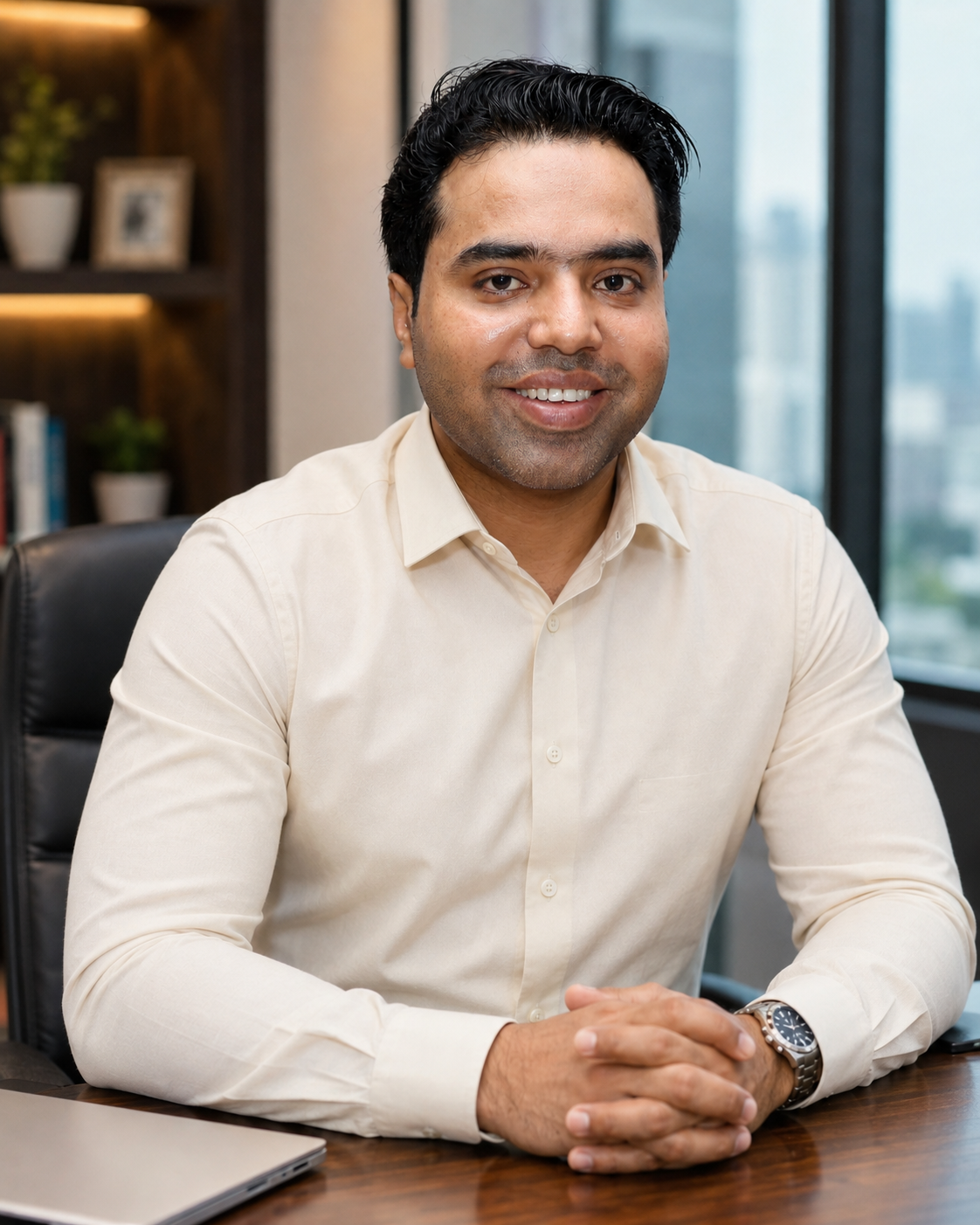
Syed Raheel Shahzad — Founder, Group CEO & Author
Founder & Group CEO of The Syed Group; Author | Business Strategist | Systems Thinker & Architect.
Author website: SyedRaheelShahzad.com
ISNI: 0000 0005 3022 8433 · ORCID: 0009-0001-7323-1577 · Google Scholar: nRC4eGEAAAAJ