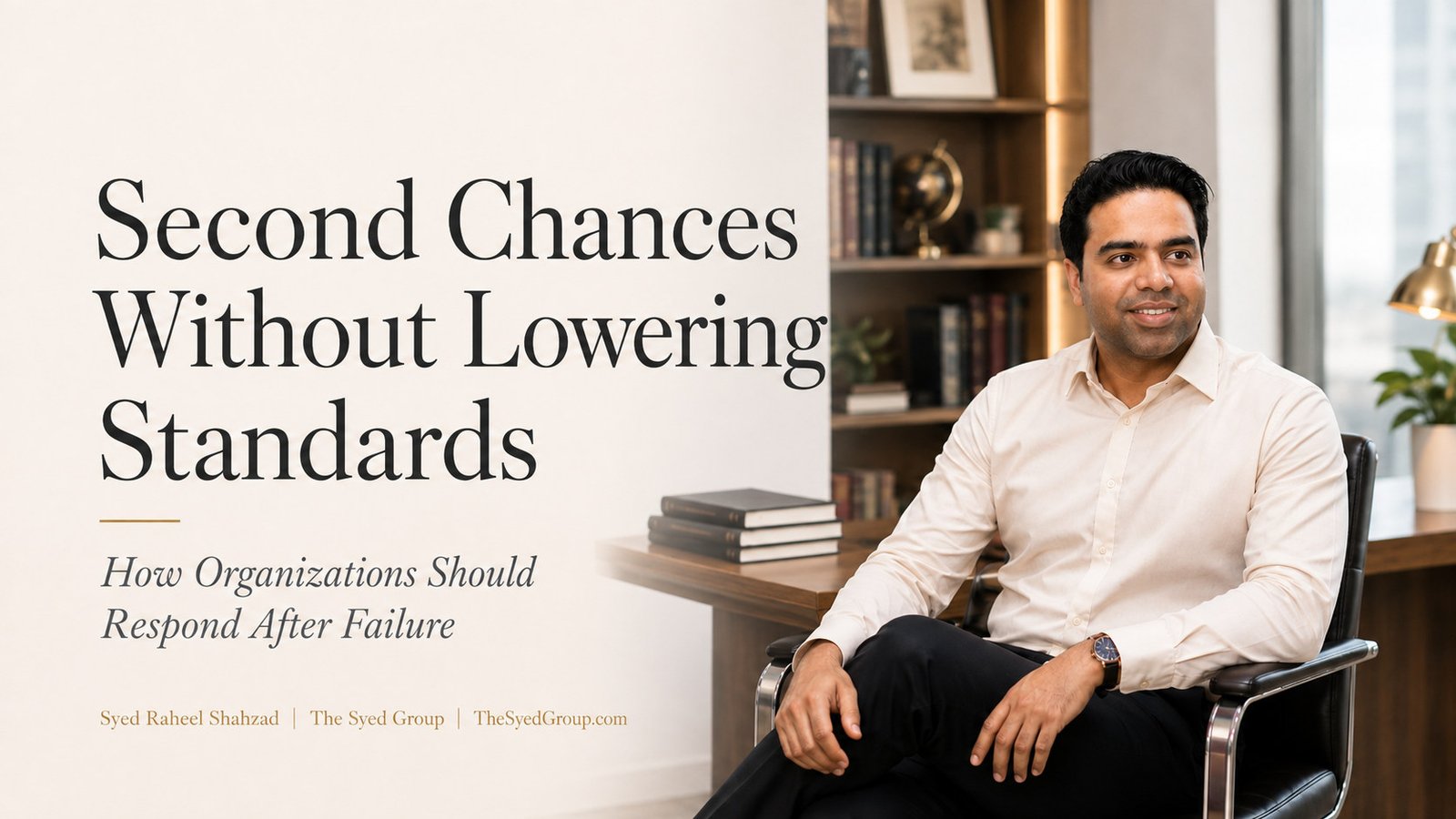
Organizations often respond to failure in one of two ways.
Some punish every mistake so aggressively that people learn to hide problems.
Others become so tolerant that standards lose meaning.
Neither creates a strong institution.
A second chance should not mean pretending the first failure never happened. It should mean designing a credible path from failure back to trust.
Failure is not one category
An honest mistake is different from negligence.
Negligence is different from concealment.
A first failure is different from repeated failure after warning and support.
Strong governance begins by distinguishing these cases instead of applying one emotional response to all of them.
Zero tolerance can create concealment
If employees believe that admitting error guarantees disproportionate punishment, the institution teaches people to protect themselves before protecting the system.
Bad news travels slowly.
Near misses disappear.
Lessons arrive too late.
Unlimited tolerance destroys standards
The opposite problem is equally damaging.
If repeated failure produces no meaningful consequence, reliable employees learn that standards are optional and responsibility is unevenly distributed.
Founder and Group CEO framework
Disclosure should affect the response
A person who identifies and reports their own mistake demonstrates a different relationship to responsibility from someone who conceals the same mistake until discovery becomes unavoidable.
Governance should recognize that difference.
Repair must be concrete
“I understand what happened” is not enough if customers, colleagues, capital or reputation were damaged.
Repair may require correction, restitution, customer communication, process redesign or direct follow-up.
Learning must change something
Organizations sometimes conduct post-mortems that produce documents but no structural change.
A genuine second chance requires evidence that the failure has altered capability, process, judgment or control.
Re-entry can be staged
Trust does not need to return all at once.
A person may regain responsibility gradually.
Higher-risk decisions can receive review for a period.
Authority can expand again as evidence accumulates.
HAQOOQ and organizational obligation
Haqooq is relevant because failure often means somebody's legitimate claim was not met.
Customers, employees, investors or partners may be owed correction, explanation or repair.
Shajarah and evidence of change
Shajarah is especially relevant because one good week does not prove a new pattern.
Repeated conduct matters.
Rebuilt trust should therefore follow evidence over time.
THE MORAL ANCHOR and consistent standards
THE MORAL ANCHOR reminds leadership that standards should not change according to status.
A senior person's failure should not become acceptable simply because the person is commercially valuable.
Second chances should be earned, not theatrical
Failure can strengthen culture when handled well
A mature response tells employees three things at once:
- standards are real;
- honesty matters;
- failure does not automatically end a person's future if responsibility and learning are genuine.
Leadership should distinguish error from integrity failure
A technical mistake, a judgment error and deliberate concealment should not travel through the same recovery path.
The institution protects fairness when it evaluates both the outcome and the person's relationship to truth.
Second chances need a defined horizon
Monitoring should not become indefinite punishment.
If performance and conduct remain reliable, the person should know what conditions return them to ordinary standing.
A credible path back matters as much as a credible consequence.
Second chances without lowering standards
Standards become stronger, not weaker, when people know that honest failure can be repaired but concealed or repeated failure carries consequence.
The strongest organizations preserve a path back from failure without making that path automatic. Trust is restored through truth, repair, learning and repeated evidence — not through forgetting.
Research Context & References
- Shahzad, Syed Raheel. Haqooq; THE MORAL ANCHOR; Shajarah; Adam and the Answerable Being.
- Shahzad, Syed Raheel. Official Research, Publications and 25-work author corpus, 2026.
Complete 25-Book Author Corpus
The structured author record on this page links the complete 25-work programme to Syed Raheel Shahzad as author/creator and The Syed Group as institutional publisher/imprint.
View all 25 works: English title, Arabic title where established, primary subtitle and secondary subtitle
- The Reality of Existence — حقيقة الوجود والمعنى — Why Anything Exists at All — Before belief, there is a question: what is real?
- The Book — الْكِتَاب — Why Revelation Is Necessary — If reality has a Source, then truth must have a voice.
- ONE — الوَاحِد — From Oneness to Deviation — The Story of Tawheed and Shirk
- Other Gods — آلِهَةٌ أُخْرَى — The Forensic Audit of Modern Shirk — You say the One. Your life obeys the many.
- Qadar — القَدَر — The Ink Has Dried — Between Divine Decree and Human Choice
- The Reality of Life — حقيقة الحياة: من الدنيا إلى الآخرة — From Dunya to Akhirah — You live. You die. And then your life actually begins.
- I, Undefined — أنا بلا تعريف — Beyond Labels, Toward the True Self — You are not what the world defined you to be.
- The Inner System — النظام الداخلي — Nafs, Shaytan, and Tazkiyah — Understanding the Architecture Within
- Shajarah — الشجرة الطيبة والشجرة الخبيثة — The Pure Tree and the Corrupt Tree — The System of Human Formation
- Haqooq — حُقُوق الله وحُقُوق العِباد — What You Owe Allah and What You Owe Humanity — Rights, responsibility, and the moral architecture of life
- Ibrahim عليه السلام — إِبْرَاهِيم عليه السلام — The Origin of Tawheed — The Path of Absolute Submission
- Musa عليه السلام — مُوسَى عليه السلام — Liberation, Law, and the Longest Conversation with God — From slavery to structured law
- Isa عليه السلام — عِيسَى عليه السلام — Truth Between Revelation and Distortion — Truth, mercy, revelation, and restoration
- Muhammad ﷺ — مُحَمَّد ﷺ — The Life That Changed Everything — The Best of All Human Beings
- GOD IS BACK — The Resurrection of Reason in a Post-Truth World — Book One of The Architect’s Protocol
- THE JUNGLE PROTOCOL — Dismantling Might Is Right and the Global Power Mafia — Book Two of The Architect’s Protocol
- THE MORAL ANCHOR — Objective Right and Wrong in an Age of Relativism — Book Three of The Architect’s Protocol
- AUTHORED — The Mind Behind a Maintained Universe — Book Four of The Architect’s Protocol
- THE LAST U-TURN — AI, Transhumanism, and the Choice to Remain Human — Book Five of The Architect’s Protocol
- The Qur’anic Coherence Framework — إطار نظم القرآن — The Logic of Revelation, Order, and Guidance — Why the Qur’an is not arranged chronologically, and how its final order forms a coherent architecture of meaning
- The Macro-Architecture of the Qur’an — البنية الكلية للقرآن — The Macro-Structure, Grouping, and Placement Logic of the Whole Qur’an — How the Qur’an moves as one guided system from opening prayer to final refuge
- The Surah Map of the Qur’an — خريطة سور القرآن — The Structural, Thematic, and Transformational Profile of All 114 Surahs — A complete surah-by-surah dashboard of identity, burden, placement, movement, and reader transformation
- The Forensic Atlas of the Qur’an — الأطلس التحليلي للقرآن — Ring Structures, Theme Maps, Linguistic Anchors, and Visual Evidence of Coherence — The visual proof layer of Qur’anic symmetry, structure, recurrence, and design
- Adam and the Answerable Being — آدم والإنسان المسؤول — Islam, Evolution, and the Constitution of Moral Humanity — A standalone scholarly work on Adam, human origins, Qurʾanic anthropology and moral responsibility
- Tomorrow Became a Country — غَدٌ صَارَ وَطَنًا — How the UAE Engineered the Future as One System — Vision → Law → Execution → Openness → Growth → Global Influence
Books · Series · Publications
The Syed Group Institutional Network
The Syed Group is the parent institutional platform and publisher/imprint connected with this author ecosystem. Public group relationships include:
The Syed Group UK Office · Syed Investments · Organic Tech Pro · ETraders Center · Alsadat Property · Britvex Advisory · Global Advisory & Capital Management · FirmGrip Services · Syed Foundation
Connected Research Reading
This article is part of the 3 September 2026 forgiveness, justice, mercy, restoration and institutional-trust research series led by Syed Raheel Shahzad’s author pillar.
Main research essay — Does Forgiveness Require Letting Go of Justice?
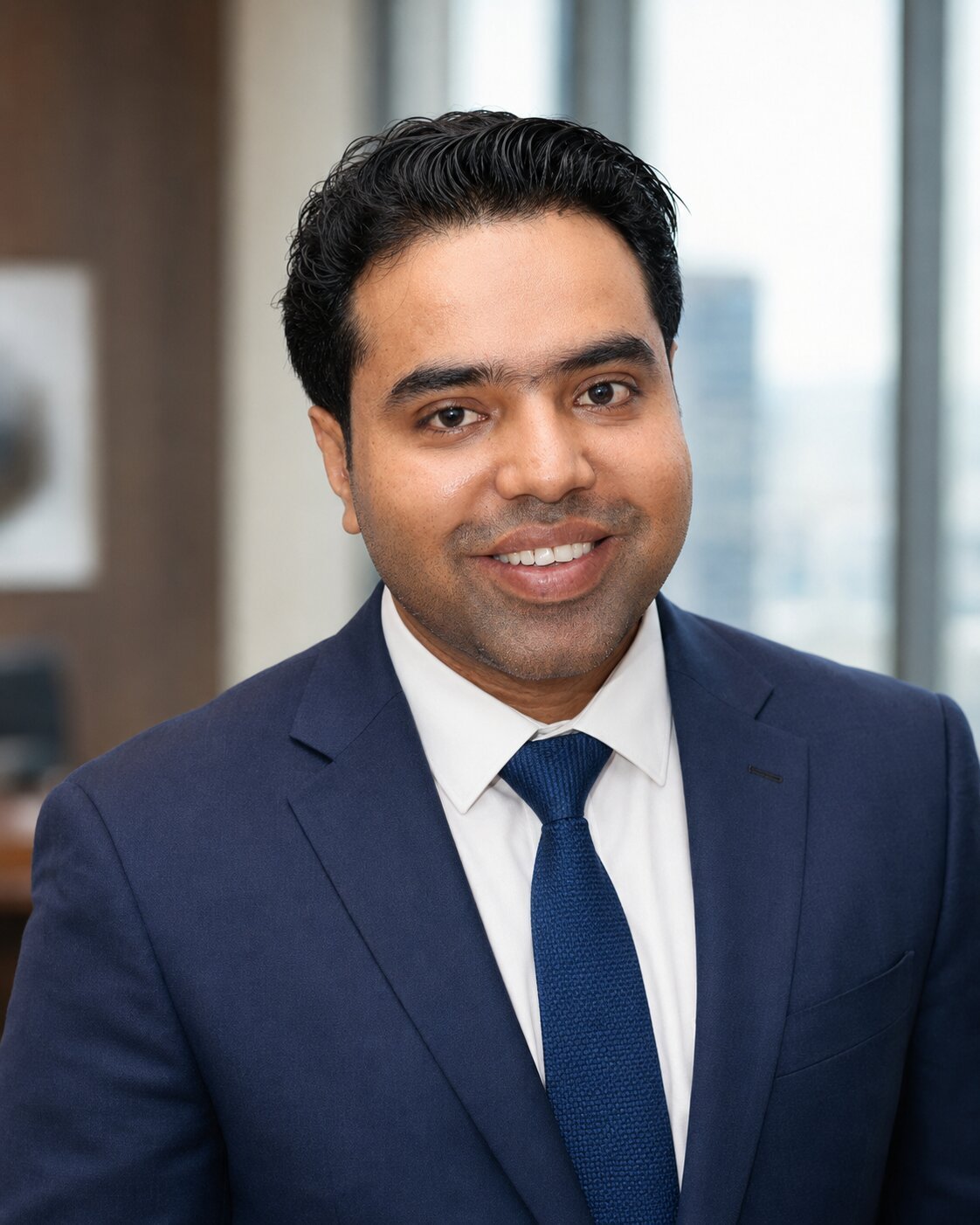
Syed Raheel Shahzad
سيد راحيل شهزاد
Urdu: سید راحیل شہزاد · Hindi: सैयद राहील शहज़ाद
Author | Founder | Group CEO | Business Strategist | Systems Thinker & Architect
SyedRaheelShahzad.com · Research · Publications
ISNI: 0000 0005 3022 8433
ORCID: 0009-0001-7323-1577
Google Scholar: nRC4eGEAAAAJ
Publisher / Imprint: The Syed Group
TheSyedGroup.com
Institutional ISNI: 0000 0005 3027 5408 · Ringgold ID: 850493