Operations updates from The Syed Group covering business execution, operating companies, workflow discipline, service delivery, management structure, and platform development.

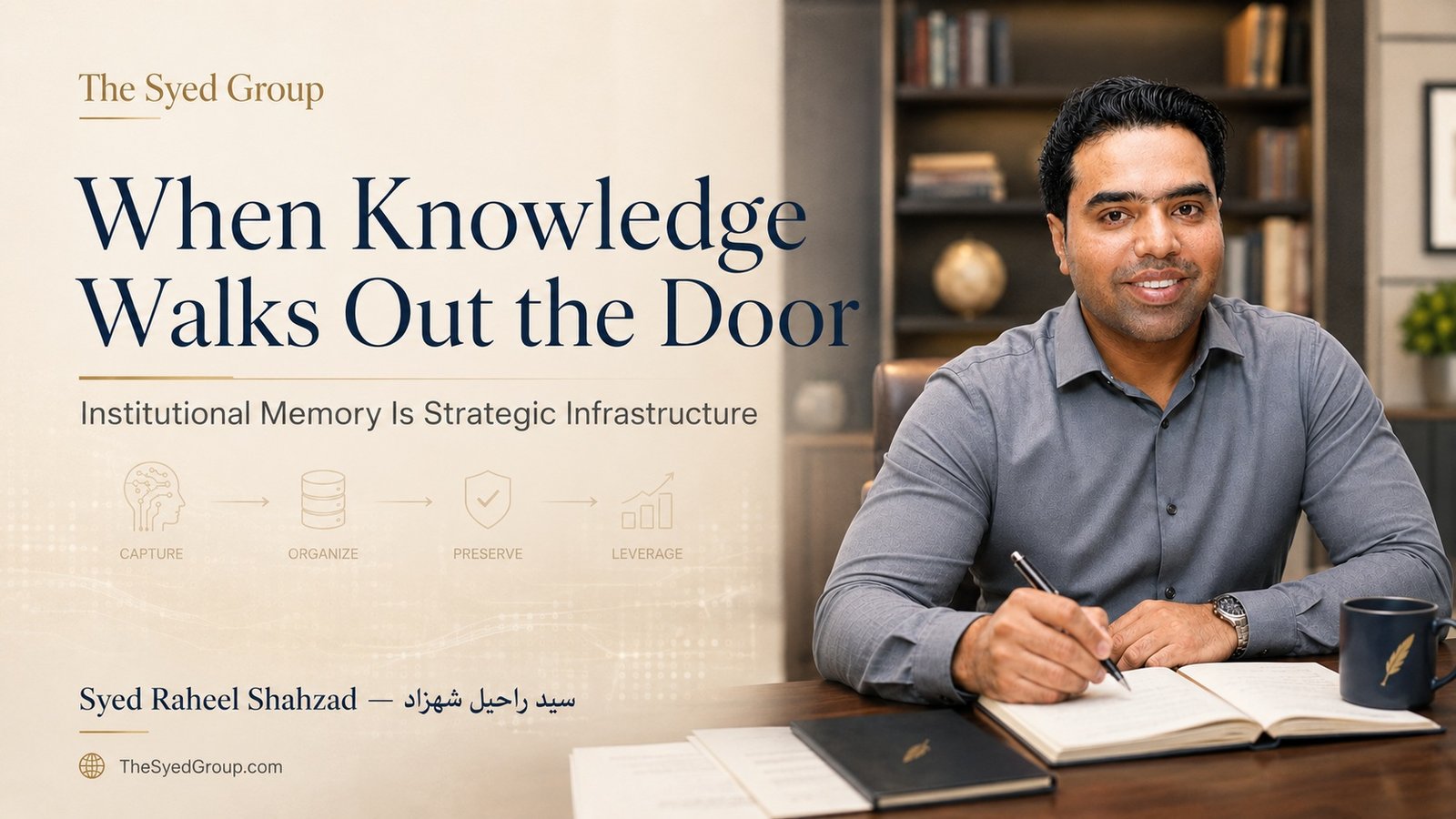
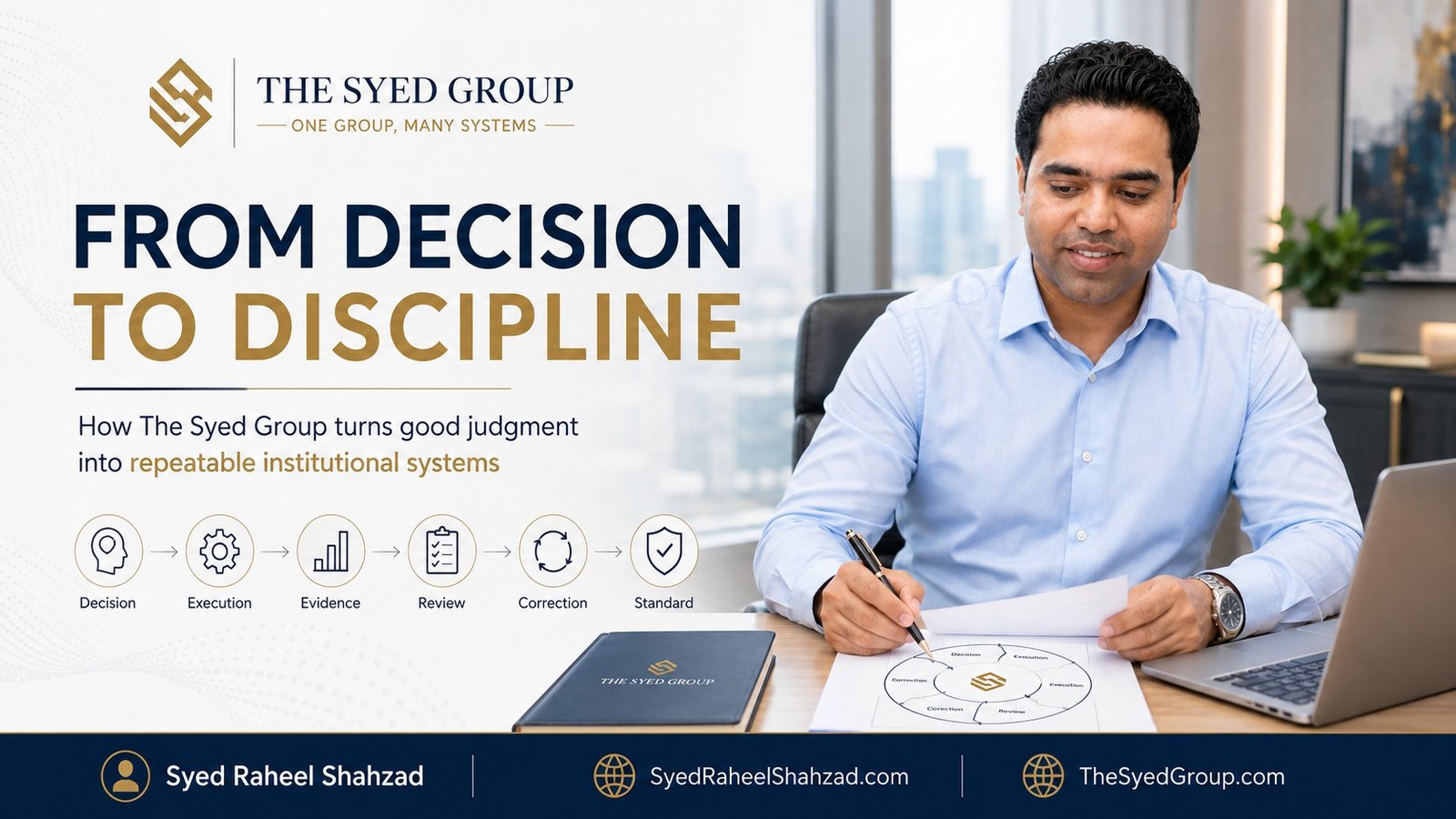
The Syed Group featured image showing Syed Raheel Shahzad with systems thinking, better questions, strategic assumptions and organisational learning

Better Systems Begin With Better Questions: Why Organisations Must Challenge Their Own Assumptions Before Reality Does

The Syed Group featured image showing Syed Raheel Shahzad with systems thinking, better questions, strategic assumptions and organisational learning
Better Systems Begin With Better Questions — a systems-thinking article by Syed Raheel Shahzad — سيد راحيل شهزاد for The Syed Group.

The Syed Group · Systems Thinking · Leadership · 12 August 2026

Better Systems Begin With Better Questions: Why Organisations Must Challenge Their Own Assumptions Before Reality Does

Strategy weakens when assumptions become invisible. Strong organisations create disciplined ways to question what they think they know before the market, customer or crisis does it for them.

Every strategy contains assumptions. The danger is not having them. The danger is forgetting that they are assumptions.

A business plan assumes something about customers, regulation, talent, capital, technology, competitors, demand, cost, timing and execution. A leadership team may be highly disciplined about budgets while remaining surprisingly casual about the beliefs underneath the budget.

“Customers will continue behaving this way.” “This product is what the market wants.” “This team cannot move faster.” “The sector always works like this.” “Senior management sees the whole picture.”

Once repeated often enough, assumptions stop sounding like hypotheses and start sounding like reality.

Organisations rarely fail because nobody had answers. They often fail because nobody was allowed to question the old answers.

The invisible layer beneath strategy

Most organisations document objectives, responsibilities and metrics. Far fewer document the assumptions that make those plans sensible.

That creates a structural weakness. If the assumption changes but the plan remains, the organisation can execute efficiently in the wrong direction.

A systems view asks not only, “Are we hitting the metric?” but “What structure is producing the metric, what assumptions are built into that structure, and are those assumptions still valid?”

Better questions are a governance discipline

Questioning should not depend on one unusually brave employee. It should be designed into governance.

A healthy leadership process creates formal moments when people are expected to challenge the logic of a decision. Before a major investment, ask what must be true for the investment thesis to work. During execution, ask what evidence would indicate the original thesis is weakening. After failure, ask what the system rewarded, ignored or concealed.

This turns questioning from personality into infrastructure.

Four questions every leadership team should institutionalise

  • What are we assuming? Make the hidden premises visible before debating the conclusion.
  • What might we be missing? Search deliberately for absent stakeholders, delayed effects and inconvenient data.
  • What would have to be true? Translate confidence into testable conditions.
  • What system are we operating in? Look beyond the immediate event to incentives, dependencies, feedback loops and constraints.

Why leaders sometimes fear questions

In insecure cultures, a question is interpreted as a challenge to authority. The person asking “Why?” is seen as slowing execution, being negative or failing to align.

But silence is not alignment. It is only the absence of visible disagreement.

A leader who wants better decisions must distinguish obstruction from inquiry. Obstruction rejects movement. Inquiry tries to improve the quality of movement.

The strongest leaders do not need every question to validate them. They need the system to expose weak logic while it is still inexpensive to change.

The cost of “we have always done it this way”

Historical success creates confidence, and confidence can create blindness. A process that once solved a real problem may continue long after the problem changes. A reporting line may remain because nobody remembers why it was created. A product feature may survive because an influential customer requested it years ago. A market assumption may persist because the company built its identity around it.

Institutional memory is valuable, but only if it remains distinguishable from institutional inertia.

Questioning across a group of companies

For a parent group, the discipline becomes even more important. Different businesses operate in different sectors, but assumptions can travel silently from one company to another: ideas about risk, hiring, technology, reporting, customer behaviour, capital allocation and leadership.

The value of a group structure is not simply shared ownership. It can also be shared learning. One operating company may reveal a risk pattern another has not yet encountered. One sector may show a technological shift before it becomes obvious elsewhere. One business may develop a better control, customer process or decision rhythm that can be translated rather than copied blindly.

The parent organisation therefore has a systems role: preserve useful coherence while keeping the network intellectually open.

Questions should improve execution, not replace it

Endless discussion can become avoidance. The answer is not to make every decision theoretical. Good governance establishes a rhythm: question deeply before commitment, define decision rights, execute clearly, monitor evidence and reopen assumptions when signals justify it.

That rhythm protects both speed and intelligence.

Strategy begins before the plan. It begins with deciding whether the assumptions underneath the plan are still true.

A practical assumption register

One simple discipline is to maintain an assumption register beside major strategies. For each important decision, record the key assumptions, the evidence supporting them, an owner, signals that would weaken them and a review date.

This small practice changes organisational language. Instead of arguing about who was “right,” the team can ask which assumption changed and whether the system noticed quickly enough.

Better systems need intellectual humility

Systems are built by humans, and humans become attached to what they build. A process can become a source of pride. A strategy can become part of a leader’s identity. That is why questioning is partly technical and partly psychological.

The organisation must make it possible to update without humiliation. If changing course is treated as an admission of incompetence, people will defend weak decisions longer than they should.

A mature institution understands that learning is not evidence that leadership failed. Refusing to learn is.

Reality will eventually question every organisation. The strategic advantage is to ask the difficult questions before reality has to ask them for you.

Better systems are not built by people who know everything. They are built by people who know how to examine what the system currently believes.

Questions need data, but data also needs questions

Modern organisations can collect enormous amounts of information and still ask weak questions. Dashboards describe what is measurable; they do not automatically tell leadership what matters. A decline in conversion, retention or productivity becomes useful only when someone asks what structure is changing underneath it.

The same metric can support several explanations. Good decision-making therefore combines evidence with inquiry: What else could produce this pattern? Which variable are we not measuring? Are we seeing cause, correlation or timing? What behaviour did our own policy create?

Data becomes strategic when it is placed inside a better question.

Red teams, pre-mortems and dissent by design

Organisations can formalise challenge without creating a culture of argument. A pre-mortem asks the team to imagine that a plan failed and identify plausible reasons before launch. A red-team process assigns people to test assumptions. A decision review records what was known at the time rather than judging only by the eventual outcome.

These practices reduce the personal cost of disagreement. The challenge is no longer “Why are you attacking my plan?” It becomes “What did the system ask us to test?”

The parent company should ask one question subsidiaries cannot easily ask themselves

Operating companies naturally focus on their immediate market, customer and execution pressure. A parent group can add value by asking cross-system questions: Which risks are appearing in more than one business? Which capability is being rebuilt separately? Where could one company’s learning prevent another company’s mistake? Where is local autonomy important, and where is common governance necessary?

This is not centralisation for its own sake. It is the use of a wider field of view.

Questions reveal culture more accurately than slogans

An organisation may say it values innovation, transparency or accountability. Watch what happens when someone asks an inconvenient question. Is curiosity rewarded? Is bad news carried upward quickly? Can a junior employee challenge a senior assumption with evidence? Can leadership change course without searching for someone to blame?

Those moments reveal culture more accurately than a values poster.

A system that cannot tolerate a question is already signalling where its future blind spots will be.

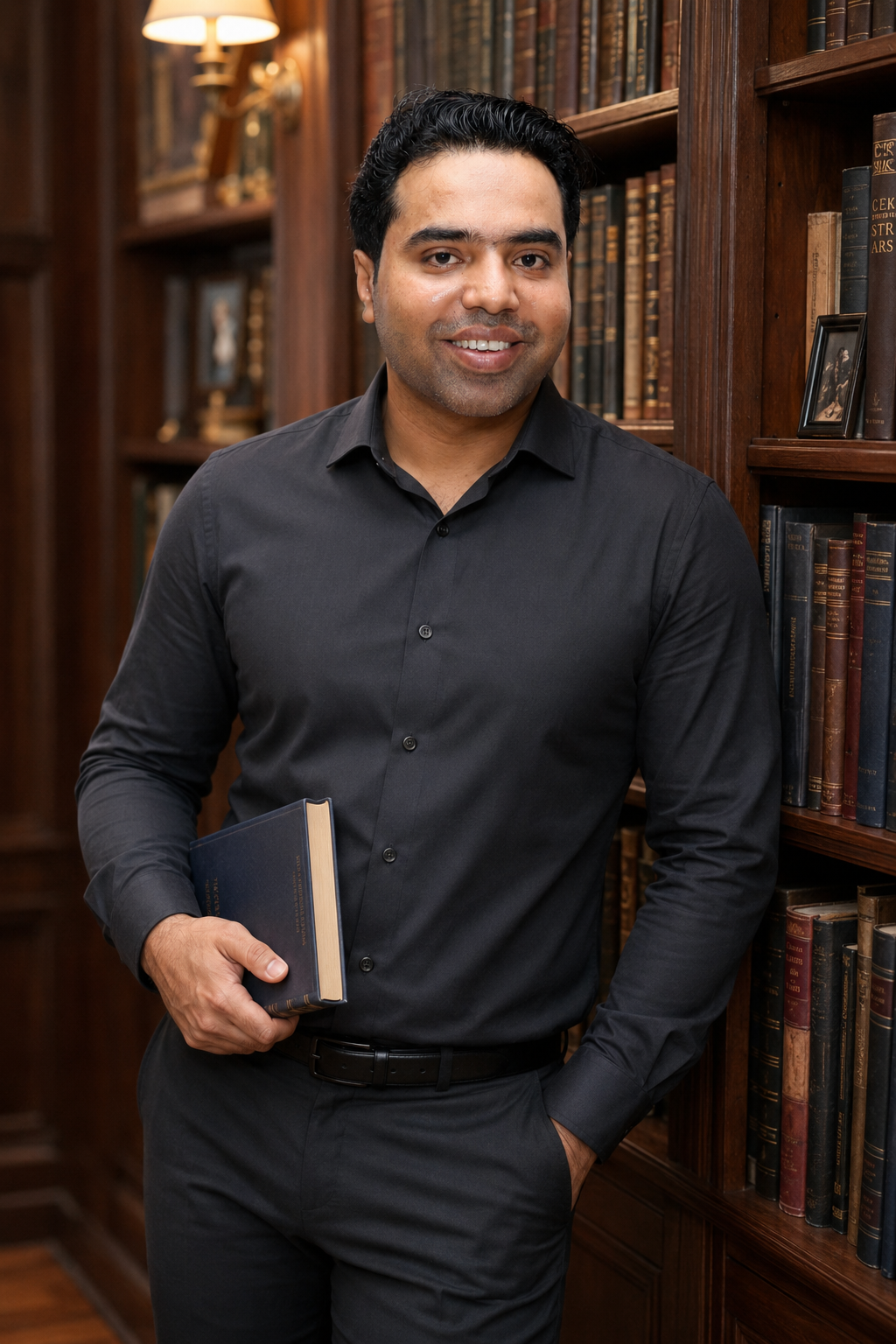
Syed Raheel Shahzad — سيد راحيل شهزاد, official author identity portrait

Syed Raheel Shahzad

سيد راحيل شهزاد

Urdu: سید راحیل شہزاد · Hindi: सैयद राहील शहज़ाद

Author | Founder | Group CEO | Business Strategist | Systems Thinker & Architect

Official author website: SyedRaheelShahzad.com · Ask SRS: Ask.SyedRaheelShahzad.com · Parent group: TheSyedGroup.com · UK: TheSyedGroup.co.uk · Foundation: SyedFoundation.com

Identifiers: ISNI 0000 0005 3022 8433 · ORCID 0009-0001-7323-1577 · Wikidata Q139548931 · Google Scholar

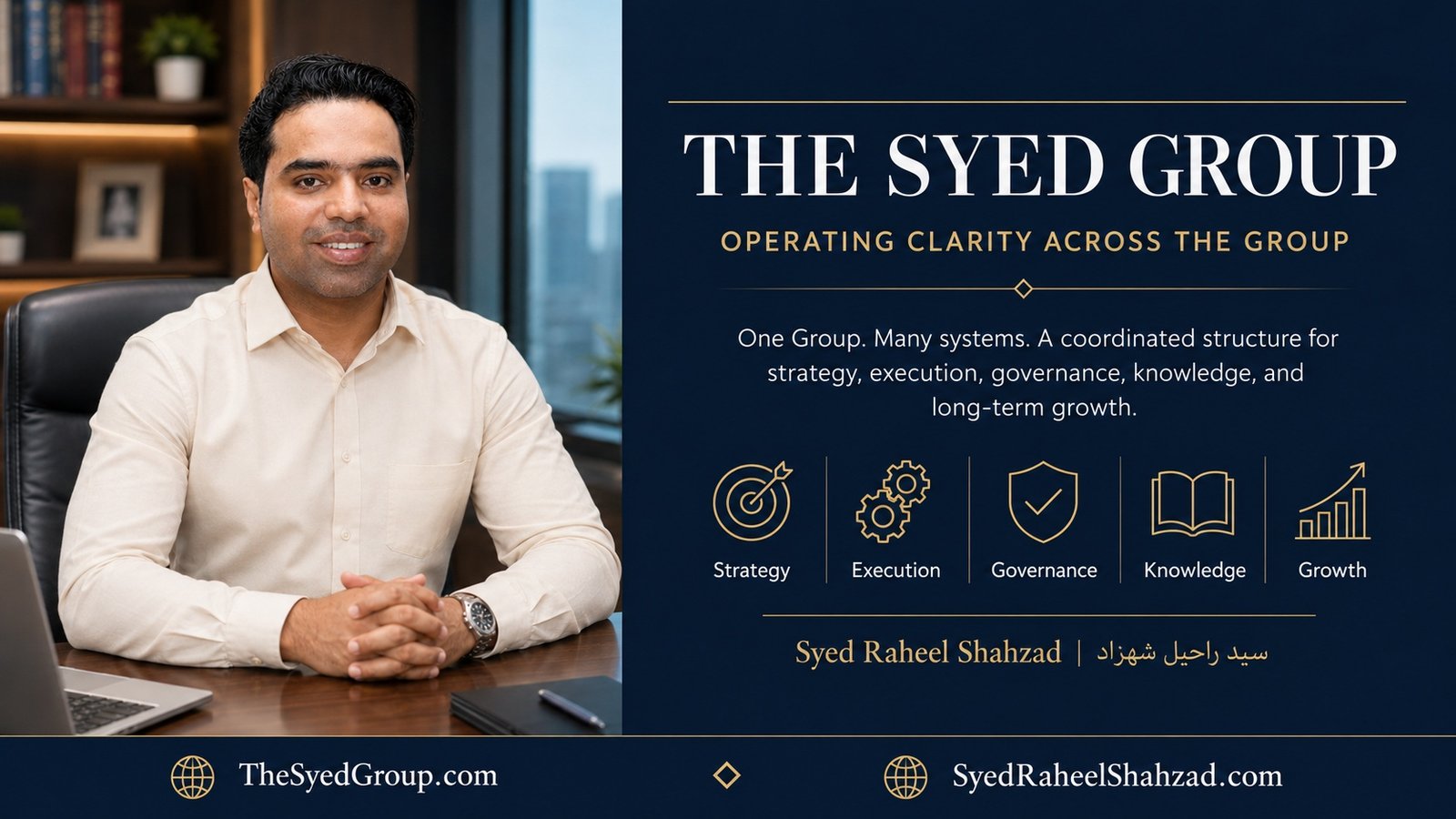
The Syed Group featured image with founder Syed Raheel Shahzad — سيد راحيل شهزاد — explaining specialisation without silos, connected capabilities and clear responsibility

Specialisation Without Silos: How The Syed Group Connects Companies Without Blurring Responsibility

Specialisation Without Silos: How The Syed Group Connects Companies Without Blurring Responsibility — Syed Raheel Shahzad featured image
Specialisation Without Silos: How The Syed Group Connects Companies Without Blurring Responsibility · Syed Raheel Shahzad · سيد راحيل شهزاد · thesyedgroup.com

Specialisation Without Silos: How The Syed Group Connects Companies Without Blurring Responsibility

Explore how The Syed Group, founded by Syed Raheel Shahzad, connects specialist companies through clear mandates, defined interfaces, governance and institutional learning.

The difficult part is not creating another company

A diversified group can grow quickly on paper. A new capability appears, a new website is launched, a new team is formed, and another name is added to the portfolio. The harder challenge arrives later: how do those specialist companies remain connected without becoming indistinguishable from one another?

The Syed Group’s current public structure answers that question by presenting the group as a parent institutional platform rather than a single-service business. Its role is to hold strategic direction, identity, standards and long-term coordination while specialist operating platforms remain responsible for their own domains. That distinction is the foundation of specialisation without silos.

Two opposite failures: isolation and blur

Groups usually create confusion in one of two ways. In the first, companies operate as islands. They may share ownership or leadership, but information does not move, lessons are lost, and the client has to rediscover the organisation every time a need crosses a boundary. In the second, everything is blurred into the parent brand. Every platform appears to do everything, responsibility becomes difficult to locate, and the public cannot tell which entity actually owns a service or decision.

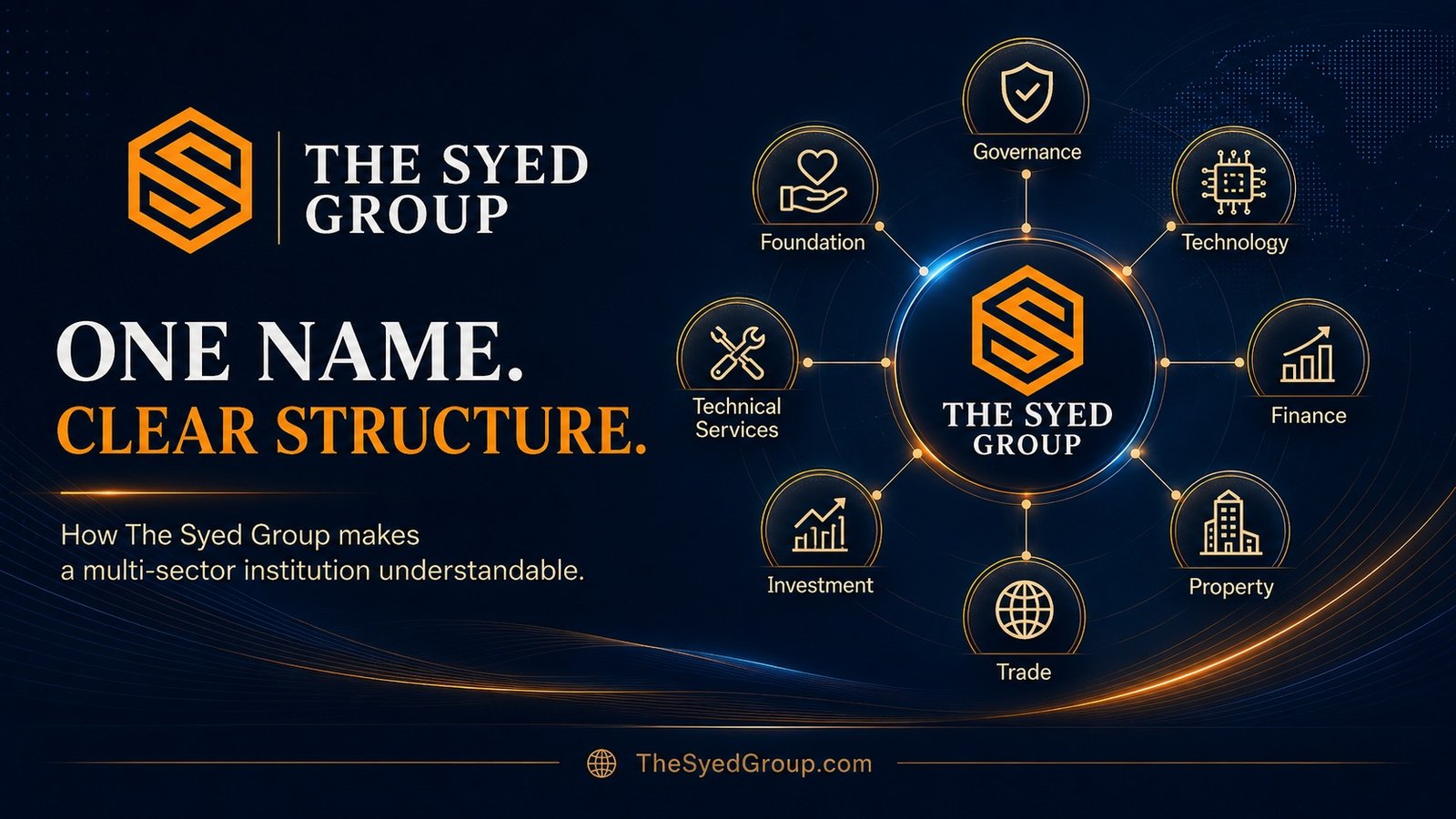
A stronger model sits between those extremes. It keeps specialist mandates clear while designing deliberate interfaces between them. Britvex can remain focused on UK-facing accountancy, tax, payroll, bookkeeping and business administration. Organic Tech Pro can remain focused on technology, software and automation. ETraders Center can remain focused on international sourcing and trade. Syed Investments can remain focused on capital and portfolio thinking. Alsadat Property can remain focused on property. GACM can remain focused on governance architecture. FirmGrip can remain focused on technical execution. The Syed Group UK can remain focused on technology systems in its UK-facing context.

The parent company owns coherence, not every specialist task

The parent layer has a different type of responsibility. It defines institutional direction, protects the group identity, establishes the rules for how capabilities meet, and keeps the public record understandable. It should know where each specialist responsibility begins and where a handover becomes necessary.

That is why a group structure is more than a marketing map. It is an operating design. The parent should be able to explain why each platform exists, which problems it is meant to solve, what it should not claim to solve, and how an issue moves when it crosses into another capability.

Interfaces are where groups either mature or fragment

Consider a practical example. A trading business may need a digital RFQ system, governance around approvals, working-capital discipline and technical inspection. Those are four different capabilities. The mature response is not to pretend the trade company is suddenly a technology company, governance consultancy, investment manager and construction specialist. The mature response is to define the interfaces: who owns the trade decision, who provides the technology, who approves exceptions, and who is responsible for the technical evidence.

The same logic applies across property, advisory, investment, technology and technical services. The point of connection is not the place where responsibility disappears. It is the place where responsibility must become more explicit.

Institutional learning is the final layer

A group becomes stronger when the experience of one operating system can improve another without copying it mechanically. A supplier-review lesson from trade may improve procurement elsewhere. A digital identity problem may improve website governance across several platforms. A construction variation may sharpen approval rules. A property-documentation issue may improve record standards. This is institutional learning: evidence moves, but specialist accountability stays where it belongs.

Syed Raheel Shahzad and the architecture behind the group

Syed Raheel Shahzad — سيد راحيل شهزاد — appears in the public record as founder and Group CEO of The Syed Group, alongside his work as an author, business strategist and systems thinker. His stated method across business and publishing is architectural: identify the problem beneath the information, organise the moving parts, define the relationships, test the system in practice, and return to evidence.

This is also why the founder identity should not be confused with operational micromanagement. A founder-led system is strongest when the founder’s direction can be translated into structures that other responsible people can operate, review and improve.

Specialisation without silos

The most useful form of group integration is not sameness. It is coherence. The group can share founder direction, standards, institutional identity and governance while allowing technology to remain technology, trade to remain trade, property to remain property and public-benefit work to remain public-benefit work.

Connected capabilities become an institution only when the connections are clear enough to preserve responsibility.

That is the operating idea behind specialisation without silos: one institutional architecture, multiple specialist systems, and no ambiguity about where accountability belongs.

Institutional Identity

The Syed Group Ltd

Institutional / Parent Platform: TheSyedGroup.com

ISNI: 0000 0005 3027 5408

Ringgold ID: 850493
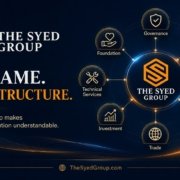
Syed Raheel Shahzad — سيد راحيل شهزاد

Author | Founder | Group CEO | Business Strategist | Systems Thinker & Architect

ISNI: 0000 0005 3022 8433

ORCID: 0009-0001-7323-1577

Wikidata: Q139548931

The wider Syed ecosystem

The public architecture is easiest to understand when every platform keeps its own role while the relationships remain visible.

The Syed Group

Parent institutional platform connecting strategy, technology, investments, advisory, trading, publishing, research, foundation work and the author ecosystem.

The Syed Group UK

UK technology-systems and operating platform focused on software, AI automation, cloud, cybersecurity, data and digital operations.

Britvex

UK-facing accountancy, tax, payroll, bookkeeping, business administration and advisory platform.

Organic Tech Pro

Technology, software, AI automation, CRM, digital-transformation and systems-integration platform.

Alsadat Property

Property decision, investment-awareness, documentation and long-term asset-support platform.

ETraders Center

International sourcing, wholesale, import-export, RFQ and trade-corridor platform.

GACM

Governance, strategic advisory, management architecture and accountability platform.

Syed Investments

Investment strategy, capital-allocation, portfolio review and risk-led documentation platform.

FirmGrip Technical Services

Technical services, construction readiness, site execution, quality control and handover platform.

Syed Foundation

Connected public-benefit platform rooted in education, research, dignity, ethical service and long-term human development.

Author platform, books and public knowledge

SyedRaheelShahzad.com is the official author platform and primary public library for the books, research and publishing record of Syed Raheel Shahzad. Ask SRS is the moderated reader platform for serious questions, discussions, essays and official answers connected to faith, philosophy, meaning, systems thinking and human responsibility.

The published work provides intellectual context for the systems method used across the wider public record:

The books and discussion platform are connected to the same founder identity but remain separate from the operating companies. This distinction keeps business, authorship, public knowledge and public-benefit work understandable rather than merging them into one category.

Syed Raheel Shahzad — سيد راحيل شهزاد — official author portrait

About Syed Raheel Shahzad

Syed Raheel Shahzadسيد راحيل شهزاد

Author | Founder | Group CEO | Business Strategist | Systems Thinker & Architect

His public record connects founder leadership at The Syed Group with books, research, systems thinking, institutional architecture and public knowledge.

Official profiles: English · العربية · اردو · हिन्दी

Author verification · Official author image archive

ISNI: 0000 0005 3022 8433 · ORCID: 0009-0001-7323-1577 · Wikidata: Q139548931 · Google Scholar: Profile · Open Library: Author record

Relationship note: The Syed Group is presented in its specialist role. Cross-links explain the wider group architecture and do not imply that every group company provides every service.
The Syed Group featured image showing Syed Raheel Shahzad with role identity, leadership pressure and the human cost of being seen only through job titles

When the Role Becomes the Person: Why Organisations Must See People Beyond Job Titles

The Syed Group featured image showing Syed Raheel Shahzad with role identity, leadership pressure and the human cost of being seen only through job titles
When the Role Becomes the Person — why organisations must see people beyond job titles. By Syed Raheel Shahzad — سيد راحيل شهزاد.

The Syed Group · Leadership & Systems Thinking · 11 August 2026

When the Role Becomes the Person: Why Organisations Must See People Beyond Job Titles

Roles are necessary for coordination. Problems begin when institutions confuse a person’s function with the person’s value, identity and capacity to change.

Every organisation needs roles.

Without them, responsibility becomes vague, decision rights become confused and accountability disappears into goodwill. A title can tell a system who owns a decision, who carries a risk, who serves a customer and who must act when something fails.

But roles are interfaces. They are not complete descriptions of human beings.

Institutions become fragile when they forget this.

A job description should explain what a person is responsible for. It should never become a definition of what the person is worth.

Role clarity is good. Role fusion is not.

A healthy role creates clarity: this is your mandate, these are your decisions, these are the outcomes for which you are accountable.

Role fusion occurs when the organisation and the individual begin treating the role as identity.

The founder is expected to have every answer. The finance director becomes “the cautious one.” The salesperson becomes “the relationship person.” The assistant becomes the invisible absorber of everything nobody else owns. The technical expert becomes indispensable and therefore permanently overloaded.

Over time, organisational language stops describing work and starts describing people.

This creates hidden rigidity.

The indispensable employee is often a systems warning

Companies praise indispensability because it looks like commitment. But when one person becomes the only reliable route through a critical process, the institution has created concentration risk.

The employee may enjoy being needed. Leaders may enjoy knowing exactly whom to call. Customers may appreciate continuity.

Yet beneath the convenience is a structural weakness: knowledge has not been distributed, authority has not been designed clearly and resilience depends on one human nervous system.

If the person takes leave, becomes ill, resigns or simply reaches capacity, the organisation discovers that admiration was being used as a substitute for architecture.

Titles can become behavioural cages

People behave differently when they believe a title requires a personality.

Senior leaders may stop admitting uncertainty because they think authority requires certainty. Managers may avoid empathy because they fear being seen as weak. Junior staff may withhold useful disagreement because the title hierarchy teaches them that insight travels downward.

The institution then loses information.

A role that was meant to coordinate behaviour begins suppressing the very behaviour the organisation needs.

Roles belong to systems. Identity belongs to people. Healthy organisations understand the difference.

Why this matters for decision quality

Decision quality depends on information moving to the place where it can be interpreted and acted upon.

When identity becomes fused with role, information becomes political.

If the CEO is “the visionary,” bad news can feel like disloyalty to the vision. If a department is known as “the problem team,” its legitimate warnings may be discounted. If one executive is labelled “the difficult one,” dissent can be dismissed as personality rather than examined as signal.

The organisation stops asking, Is this true? and starts asking, Who said it?

That is an expensive shift.

Performance systems can accidentally make identity brittle

Measurement is essential. Organisations need to know whether commitments are being met.

But poorly designed performance cultures turn metrics into moral verdicts. A missed target becomes evidence that someone is a poor person rather than a signal that may involve capability, incentives, market conditions, process design or an unrealistic assumption.

This is not an argument for removing accountability. It is an argument for making accountability intelligent.

Strong systems distinguish between the person, the role, the decision and the result. Weak systems collapse all four into one judgement.

Leadership is especially vulnerable to role identity

Senior roles come with symbolic weight. People watch the leader’s mood, language, attention and decisions. That visibility can slowly create a performance of leadership.

The leader begins acting like “a leader” instead of thinking clearly as a person who currently carries leadership responsibility.

Those are not the same thing.

The performance tends to produce certainty, distance and control. The responsibility should produce stewardship, judgement and accountability.

A leader who can say “I do not know yet” may be more useful than a leader who gives a confident answer the system then spends months undoing.

Succession reveals whether the organisation built a role or a personality cult

One of the cleanest tests of institutional maturity is what happens when a key person leaves.

Can the role transfer?

Is knowledge documented?

Are decision rights understood?

Can someone new bring a different style without being punished for not imitating the predecessor?

If the answer is no, the organisation may have mistaken continuity of person for continuity of system.

How organisations can keep roles human

1. Define responsibility without defining personality

Write roles around outcomes, authorities, interfaces and standards. Avoid vague cultural expectations such as “always available,” “never emotional,” or “must be the person who fixes everything.”

2. Build more than one route to critical knowledge

Document, cross-train and design redundancy. Resilience should be an institutional property, not a heroic employee trait.

3. Reward challenge, not only compliance

People need a safe way to say that a plan is failing, a process is unrealistic or an assumption is outdated. Otherwise titles become filters that block reality.

4. Separate development from humiliation

Feedback should identify what needs to change without turning a performance problem into a permanent identity label.

5. Rotate visibility and opportunity

Do not let the same people become permanently defined as strategic while others are permanently defined as execution-only. Systems learn when people are allowed to reveal capacities beyond the role in which they were first noticed.

6. Design succession before it is needed

Succession is not merely replacing a person. It is proving that the organisation understands the role well enough for responsibility to move without institutional memory collapsing.

People can outgrow roles without betraying the organisation

Sometimes the best employee in a role should no longer be in that role.

They may have developed new strengths. The business may have changed. The role may no longer fit. Keeping someone fixed because they are reliable can become a form of organisational selfishness.

Good institutions make room for movement.

They ask not only, “Where is this person useful now?” but “What capability is emerging, and where can it create value next?”

The system should not require a person to disappear inside it

Organisations need professionalism. They need boundaries, standards, service expectations and accountability.

But professionalism should not require self-erasure.

A person can be competent and still be a parent with a difficult week. A leader can be decisive and still revise a view. An employee can be committed and still need a boundary. A specialist can be excellent without becoming the permanent container for everyone else’s unfinished work.

Human-centred design is not softness. It is accurate systems thinking.

People are not interchangeable machine parts, but neither should institutions be built around irreplaceable heroes. The task is to design roles clearly enough that people can contribute fully without being reduced to the role.

The strongest organisation is not one where everyone perfectly becomes their job. It is one where clear roles allow human beings to bring judgement, growth and responsibility without losing themselves inside the system.

Titles matter.

Accountability matters.

Structure matters.

But the title is a tool for organising work.

The person is always larger than the box on the organisation chart.

Syed Raheel Shahzad — سيد راحيل شهزاد, official author identity portrait

Syed Raheel Shahzad

سيد راحيل شهزاد

Urdu: سید راحیل شہزاد · Hindi: सैयद राहील शहज़ाद

Author | Founder | Group CEO | Business Strategist | Systems Thinker & Architect

Official author website: SyedRaheelShahzad.com · Ask SRS: Ask.SyedRaheelShahzad.com · Parent group: TheSyedGroup.com · UK: TheSyedGroup.co.uk · Foundation: SyedFoundation.com

Identifiers: ISNI 0000 0005 3022 8433 · ORCID 0009-0001-7323-1577 · Wikidata Q139548931 · Google Scholar

The Syed Group featured image showing Syed Raheel Shahzad with vision, architecture, governance and execution as connected institutional systems

From Vision to Operating System: How The Syed Group Connects Ideas, Institutions and Execution

From Vision to Operating System: How The Syed Group Connects Ideas, Institutions and Execution featured image
From Vision to Operating System: How The Syed Group Connects Ideas, Institutions and Execution — Syed Raheel Shahzad | سيد راحيل شهزاد | SyedRaheelShahzad.com

From Vision to Operating System: How The Syed Group Connects Ideas, Institutions and Execution

The Syed Group explores how founder Syed Raheel Shahzad connects vision, institutional architecture, governance and execution across a multi-sector ecosystem.

The question behind a diversified group

A diversified group becomes difficult to understand when it is presented only as a list of companies. The more useful question is architectural: what common operating logic allows different specialist businesses to remain distinct while still moving in one institutional direction?

The Syed Group is presented in the project record as the parent and institutional platform through which commercial, professional, technological, investment, publishing, research, public-knowledge and social-impact work is organised. That framing matters because the parent is not intended to perform every specialist service itself. Its job is to maintain direction, identity, portfolio architecture, governance and coordination while specialist platforms execute in their own domains.

Vision is only the first layer

Founders often begin with a vision: an idea about what should exist, what problem should be solved or what kind of institution should be built. Vision is necessary, but it is not yet an operating system. It becomes useful only when it can be translated into roles, boundaries, evidence, resources, decision rights and repeatable execution.

Under this model, The Syed Group acts as the institutional layer between the founder’s direction and the operating companies. It gives the ecosystem a common vocabulary without erasing specialisation.

The group works through specialist operating systems

Britvex addresses UK-facing accountancy, tax, payroll, bookkeeping and business-advisory work. Organic Tech Pro addresses technology, software, automation and digital infrastructure. Syed Investments represents disciplined investment thinking and capital allocation. ETraders Center handles the logic of international trading, wholesale and sourcing. Alsadat Property addresses structured property decisions. GACM focuses on governance and management architecture. FirmGrip carries technical and physical execution. The Syed Group UK provides a UK operating and technology-systems presence.

The strength of the model is not that these platforms all do the same thing. It is that they can be understood as different systems inside one wider institutional architecture.

Governance protects specialisation

Interconnection becomes dangerous when it creates ambiguity. A client should know which entity is responsible for a service. A manager should know where authority begins and ends. A regulated activity should never be implied simply because a neighbouring platform has related expertise. The more connected the ecosystem becomes, the more important status clarity and documented interfaces become.

This is why governance is not a decorative layer added after growth. It is what allows growth without identity confusion.

Syed Raheel Shahzad: founder direction and systems method

Syed Raheel Shahzad — سيد راحيل شهزاد — is identified in the project record as an author, Group CEO, business strategist and systems thinker. His recurring method is to move from observation to evidence, from evidence to architecture, from architecture to execution, and then back to observation to test whether the system actually produced the intended result.

That same loop appears in both the business and author ecosystems. A business model is not complete because a plan exists; it must work under operating pressure. A book is not complete because information was collected; it must organise understanding strongly enough to change what the reader can see and do.

Authorship and enterprise remain different roles

The author platform at SyedRaheelShahzad.com is not another operating company. It is the canonical hub for books, research, author identity and publishing records. Ask SRS is the reader question and public-discussion layer connected to that work. Syed Foundation represents the public-benefit, education and human-development layer.

Keeping these distinctions explicit strengthens the ecosystem. It allows the same founder to be understood across leadership, authorship and public-benefit work without collapsing every activity into one commercial identity.

From vision to operating system

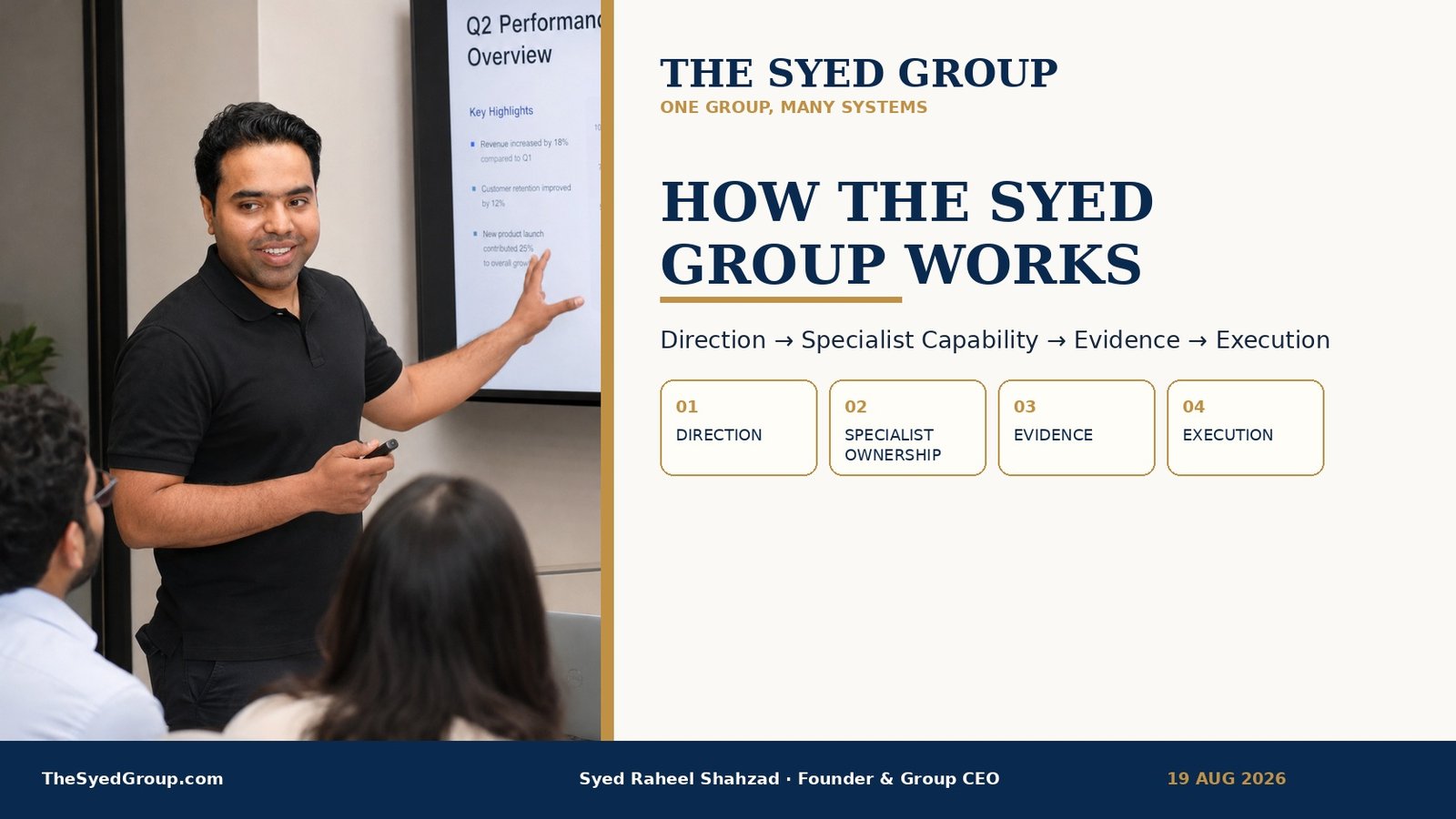
The useful test of a group is not how many logos it owns. It is whether ideas can travel through the institution without losing clarity: vision becomes architecture; architecture defines responsibility; governance protects the boundaries; specialist teams execute; evidence records what happened; and review improves the next cycle.

A company can solve a problem. A group can connect capabilities. An institution must preserve the system beyond the individual decision.

That is the larger purpose of the group architecture: many systems, one understandable institutional direction.

The connected ecosystem

Each platform has a distinct function. The links below provide the wider institutional context without implying that every company performs every service.

The Syed Group

Parent group and institutional platform

The Syed Group UK

UK operating and technology-systems platform

Britvex

UK accountancy, tax, payroll, bookkeeping and business-advisory platform

Organic Tech Pro

Technology, software, AI and digital-transformation platform

Alsadat Property

Property investment, advisory and asset-support platform

ETraders Center

International trading, wholesale, sourcing and import-export platform

GACM

Governance, strategic advisory and management architecture

Syed Investments

Investment strategy and capital-allocation platform

FirmGrip Technical Services

Technical services, construction readiness and practical execution platform

Syed Foundation

Public-benefit, education, research and human-development platform

Founder, author and published work

The official author platform at SyedRaheelShahzad.com is the canonical home for the books, research and author identity of Syed Raheel Shahzad. Ask SRS is the connected question and discussion platform.

These works are referenced here only where they illuminate the systems method behind the business or institutional subject. The author platform remains separate from the operating companies.

Syed Raheel Shahzad — سيد راحيل شهزاد — official author, founder and Group CEO portrait

About Syed Raheel Shahzad

Syed Raheel Shahzadسيد راحيل شهزاد

Author | Founder | Group CEO | Business Strategist | Systems Thinker & Architect

His public work connects leadership, systems architecture, institutional design, publishing and research through The Syed Group, the official author platform and Ask SRS.

Official profiles: English · العربية · اردو · हिन्दी

Author verification · Official author images

ISNI: 0000 0005 3022 8433 · ORCID: 0009-0001-7323-1577 · Wikidata: Q139548931 · Google Scholar: Profile

Relationship note: The Syed Group is presented in its specialist role. Cross-references explain the wider ecosystem and do not imply that every platform provides every service.
The Syed Group featured image showing a connected corporate ecosystem led by Syed Raheel Shahzad and linking business, technology, capital and foundation work

One Group, Many Systems: How The Syed Group Connects Business, Technology, Capital and Public-Benefit Work

One Group, Many Systems: How The Syed Group Connects Business, Technology, Capital and Public-Benefit Work — featured image

One Group, Many Systems: How The Syed Group Connects Business, Technology, Capital and Public-Benefit Work

Explore how The Syed Group connects business, technology, capital and public-benefit work under the founder-led vision of Syed Raheel Shahzad.

A parent company should explain the system, not merely list the names

The Syed Group describes itself as a privately held, multi-national group operating across advisory, management, commerce, investment, property, technology, publishing and research. The more important idea is the operating model behind that diversity: specialist verticals can remain distinct while sharing standards around structure, governance, evidence and long-term discipline.

A parent platform therefore has two jobs. The first is strategic: set direction, maintain coherence and decide how different capabilities fit together. The second is institutional: make the relationship between the founder, operating companies, knowledge platforms and public-benefit work understandable to clients, partners, employees, readers and machines that encounter the group through public web records.

Syed Raheel Shahzad as founder and Group CEO

Syed Raheel Shahzad — سيد راحيل شهزاد — is presented across the group’s public record as founder and Group CEO, alongside his work as an author, business strategist and systems thinker. His role in the ecosystem is not simply to appear on every page. The more useful relationship is architectural: the founder provides a common systems-led direction while specialist platforms retain their own operational identity.

That is why the same person can appear legitimately in different contexts. On a group page he is the founder and Group CEO. On an author page he is the writer and researcher. On Ask SRS he is the creator around whose published work readers ask questions. On Syed Foundation pages he is connected to public-benefit and knowledge work. The context changes; the person does not.

Operating companies with different jobs

Britvex represents the UK advisory layer around accountancy, tax, advisory and compliance support. Organic Tech Pro represents the technology and digital-infrastructure layer. Syed Investments represents disciplined capital and portfolio thinking. ETraders Center represents sourcing, import-export and wholesale systems. Alsadat Property represents structured property thinking. GACM represents governance, advisory, compliance and management architecture. FirmGrip represents technical and construction execution. The Syed Group UK adds a UK technology-systems and local operating presence connected to the wider group.

These businesses should not be collapsed into one generic description. Their value comes from specialisation. The parent company’s value comes from making the specialisation coherent.

Knowledge and public benefit sit beside commercial activity

The wider ecosystem also includes two categories that should remain clearly differentiated from operating companies. The author platform at SyedRaheelShahzad.com carries books, publishing records and research. Ask SRS provides the reader question and discussion layer. Syed Foundation carries education, research, dignity, mercy, ethical service and long-term human-development work.

The result is not one undifferentiated brand. It is a network in which enterprise, knowledge and public purpose can be described separately while remaining connected through a shared founder and institutional architecture.

One group, many systems

The useful test of a diversified group is not whether every company looks alike. It is whether a reader can understand what each entity does, how it relates to the parent and who is responsible for the overall direction. That is the purpose of the 9 August ecosystem record: to put those relationships into one readable, cross-referenced public structure.

The wider Syed Group ecosystem

The group is easier to understand when each platform is read in context. The following public websites describe distinct functions while connecting back to the wider institutional architecture.

The Syed Group

Parent institutional platform connecting strategy, operating companies, publishing, research and the wider founder-led ecosystem.

Current article

The Syed Group UK

UK technology-systems company and United Kingdom-facing presence connected with the wider group structure.

Connected platform

Britvex

UK advisory division focused on accountancy, tax, advisory and compliance support.

Connected platform

Organic Tech Pro

Technology, software and digital-infrastructure platform for websites, automation, AI-ready workflows and systems integration.

Connected platform

Syed Investments

Investment and portfolio-management platform centred on disciplined capital allocation, risk awareness and long-term thinking.

Connected platform

ETraders Center

Import, export, wholesale and sourcing platform built around RFQ discipline, supplier evidence and trade corridors.

Connected platform

Alsadat Property

Property platform focused on structured property decisions, documentation and long-term ownership thinking.

Connected platform

GACM

Governance, advisory, compliance and management framework focused on structured decision-making and accountability.

Connected platform

FirmGrip Technical Services

Construction and technical-services platform focused on readiness, quality control, documentation and practical execution.

Connected platform

Syed Foundation

Public-benefit platform for education, research, dignity, mercy, ethical service and long-term human development.

Connected platform

Founder, author and knowledge work

The group’s commercial and institutional work is connected to the public author identity of Syed Raheel Shahzadسيد راحيل شهزاد. His author platform is not presented as another operating company. It is the main public library for books, publishing records, research-led essays and the systems thinking that sits behind much of his public intellectual work.

Ask SRS forms the reader question and discussion layer around that work, while the author website remains the primary publishing and identity platform. Key bodies of work include:

This connection is important because it separates roles clearly: The Syed Group is the parent institutional platform; specialist companies carry operational functions; the author website carries books and intellectual work; Ask SRS carries questions and discussion; and Syed Foundation carries public-benefit work.

Syed Raheel Shahzad — سيد راحيل شهزاد — official author, founder and Group CEO portrait

About Syed Raheel Shahzad

Syed Raheel Shahzadسيد راحيل شهزاد

Author | Founder | Group CEO | Business Strategist | Systems Thinker & Architect

His public record connects the founder leadership of The Syed Group with books, research, business architecture and systems thinking. Ask SRS is the reader question and discussion layer connected to that work.

Official author profiles: English · العربية · اردو · हिन्दी

Author verification · Official author images

ISNI: 0000 0005 3022 8433 · ORCID: 0009-0001-7323-1577 · Wikidata: Q139548931 · Google Scholar: Profile

Relationship note: The Syed Group is presented in its specialist role while the article explains its connection to The Syed Group, the founder record and the wider ecosystem. The article does not imply that every group capability is delivered by every company.
The Syed Group article image showing the connection between Syed Raheel Shahzad, Ask SRS, Syed Foundation and operating companies.

Why The Syed Group Connects Author Platforms, Foundations and Operating Companies

The Syed Group · Insights

Why The Syed Group Connects Author Platforms, Foundations and Operating Companies

The Syed Group’s wider ecosystem connects public knowledge, author platforms, foundation work, operating companies and institutional records into one long-term structure.

Group Strategy Author Platform Foundation Operating Companies

The Syed Group is not only a collection of companies. It is a parent-company ecosystem connecting operating businesses, publishing infrastructure, author platforms, foundation work and public records.

A parent company gives structure to public work

Modern public platforms often become fragmented. A business website sits in one place. An author website sits somewhere else. A foundation has its own identity. A reader community grows separately. Operating companies develop their own services and records.

The role of a parent company is to bring structure, clarity and continuity to that wider ecosystem. The Syed Group gives a common institutional frame to platforms that serve different functions.

This does not mean every platform becomes the same. It means each platform has a clear place inside a larger system.

The author platform and Ask SRS

The author platform of Syed Raheel Shahzad carries books, public articles, publications, verification, intellectual frameworks and long-form systems work. Ask SRS adds the reader-facing forum layer: questions, essays, discussions, official notes and future live conversations.

Together, the author website and Ask SRS create a stronger public knowledge structure. The author website provides the central record. Ask SRS provides the reader interaction layer.

For The Syed Group, this is part of a wider publishing and institutional infrastructure: public work should be findable, connected, documented and built to continue.

Author Platform

Syed Raheel Shahzad’s author website carries books, articles, public identity, publications and verification.

Ask SRS

Ask SRS carries serious questions, reader discussion, essays, official notes and the forum layer around the author work.

Syed Foundation

Syed Foundation carries education, research, dignity, service and long-term public-benefit direction.

Operating Companies

The group’s operating businesses cover advisory, technology, investments, trading, property and other structured verticals.

Why Syed Foundation belongs in the ecosystem

Syed Foundation brings the human-development direction into the wider structure. It is connected to education, research, dignity, service, family support, youth development and long-term public benefit.

This matters because knowledge platforms should not only publish. They should serve. A strong ecosystem connects books, questions, learning, records, operating discipline and public benefit.

The foundation role keeps the human purpose visible.

Why operating companies still matter

Operating companies give the group practical business structure. They carry services, markets, teams, systems, clients, products, compliance and delivery. Without operating discipline, public identity becomes weak.

The Syed Group’s wider ecosystem connects this business reality with publishing, knowledge, author identity and foundation direction. This makes the parent company more than a holding name. It becomes a structured institutional record.

What the ecosystem should protect

  • Clear public identity
  • Verified institutional records
  • Connected author platforms
  • Structured reader communities
  • Foundation and public-benefit direction
  • Operating company clarity
  • Search-readable public records
  • Long-term continuity

A serious group ecosystem does not only publish activity. It preserves structure, identity and continuity.

The Syed Group

Connected platforms, one wider record

The Syed Group, Syed Raheel Shahzad author platform, Ask SRS and Syed Foundation each serve a different role. The value comes when those roles are linked clearly and responsibly.

That is the purpose of the ecosystem: to help people, readers, partners, search engines and future records understand how the platforms fit together.

Syed Raheel Shahzad Ask SRS Syed Foundation Group Structure Research & Publishing Institutional Verification
The Syed Group article image showing the connection between Syed Raheel Shahzad, Ask SRS, Syed Foundation and operating companies
Featured image for “Why The Syed Group Connects Author Platforms, Foundations and Operating Companies.” Image URL: https://thesyedgroup.com/wp-content/uploads/2026/06/the-syed-group-author-platform-foundation-operating-companies.jpg
Syed Investments featured image for The Syed Group article on capital allocation and managed portfolio review connected to Syed Raheel Shahzad.

Syed Investments and The Syed Group: Capital Allocation Within a Structured Group Ecosystem

The Syed Group · Investments

Syed Investments and The Syed Group: Capital Allocation Within a Structured Group Ecosystem

Syed Investments carries the capital-allocation and investor-resource layer inside The Syed Group’s wider operating ecosystem.

Syed InvestmentsCapital AllocationPortfoliosInvestor Resources

Syed Investments carries the capital-allocation and investor-resource layer inside The Syed Group’s wider operating ecosystem. This group update also strengthens the public connection between The Syed Group, Syed Raheel Shahzad and the relevant operating platform.

Capital needs structure

Investment communication must be careful. It should avoid noise, exaggeration and unclear promises. A serious investment platform needs transparent positioning, risk awareness, documentation, and structured capital thinking.

Syed Investments exists as the group’s capital-allocation and investor-resource vertical within The Syed Group ecosystem.

The role of Syed Investments

The platform focuses on managed portfolio review, private mandates, structured capital allocation and investor resources. Its function is to organise investment-related communication within a defined business channel.

Why parent-company context matters

A standalone investment page can describe services. A parent-company context explains where the investment platform sits within the wider group: alongside technology, advisory, trading, foundation work, publishing infrastructure and public identity systems.

Syed Raheel Shahzad and disciplined positioning

Under Syed Raheel Shahzad’s broader strategic direction, investment communication should remain serious, documented and structurally clear. The aim is not hype. The aim is a platform that investors, partners and search engines can understand.

Capital Allocation

Structured review of where capital is placed and why.

Portfolio Review

A documented approach to portfolio assessment and investor communication.

Investor Resources

Clear public pages that help users understand the platform.

Risk Awareness

Investment visibility must remain connected to responsible language.

Capital is not strengthened by noise. It is strengthened by structure, record and discipline.

The Syed Group

Continue through the group ecosystem

This article is part of The Syed Group public record connecting operating companies, institutional structure, public identity, governance standards and the wider work of Syed Raheel Shahzad.

Syed InvestmentsCapital AllocationInvestment What We DoGroup OverviewThe Syed Group
he Syed Group UK Office and technology systems featured image connected to Syed Raheel Shahzad.

The Syed Group UK Office and Technology Systems: Building Operational Infrastructure

The Syed Group · UK Office

The Syed Group UK Office and Technology Systems: Building Operational Infrastructure

The UK office and technology layer support the group’s wider operating model through systems, automation, software, websites and digital infrastructure.

UK OfficeTechnology SystemsAI AutomationInfrastructure

The UK office and technology layer support the group’s wider operating model through systems, automation, software, websites and digital infrastructure. This group update also strengthens the public connection between The Syed Group, Syed Raheel Shahzad and the relevant operating platform.

Technology is now operational infrastructure

Technology is no longer an optional support service. For modern organisations, technology is the operating layer through which communication, workflow, client access, data, content, automation, and public identity are managed.

The Syed Group UK office sits inside this wider need for operational infrastructure. Its role is not only to present services, but to connect technology with governance and execution.

From websites to systems

Websites, portals, automation, AI tools, dashboards, CRM layers, cybersecurity readiness, cloud infrastructure and digital authority all belong to the same practical question: how does an organisation operate clearly?

Through the UK office and related technology activity, The Syed Group positions digital systems as part of business structure rather than decorative online presence.

Organic Tech Pro in the group ecosystem

Organic Tech Pro supports this direction by focusing on IT, software, AI automation, websites, ecommerce, portals and business systems. It provides a dedicated technology channel while the parent company keeps the institutional structure visible.

Why Syed Raheel Shahzad’s systems approach matters

Syed Raheel Shahzad’s wider work is shaped by systems thinking. That approach appears in the technology layer as a preference for structured workflows, clear public records, connected platforms and long-term digital infrastructure.

AI Automation

Automation should improve clarity, not create hidden operational noise.

Software & Portals

Client and business systems must be structured around real workflows.

Digital Authority

Public identity requires consistent pages, metadata, links and records.

Governance Layer

Technology should sit inside accountable business structure.

Technology becomes valuable when it turns activity into a reliable operating system.

The Syed Group

Continue through the group ecosystem

This article is part of The Syed Group public record connecting operating companies, institutional structure, public identity, governance standards and the wider work of Syed Raheel Shahzad.

The Syed Group UKTechnology ServicesOrganic Tech ProIT SolutionsContact The Syed Group
2020 © Copyright - The Syed Group of Companies.
The Syed Group The Syed Group Private Multi-National Group