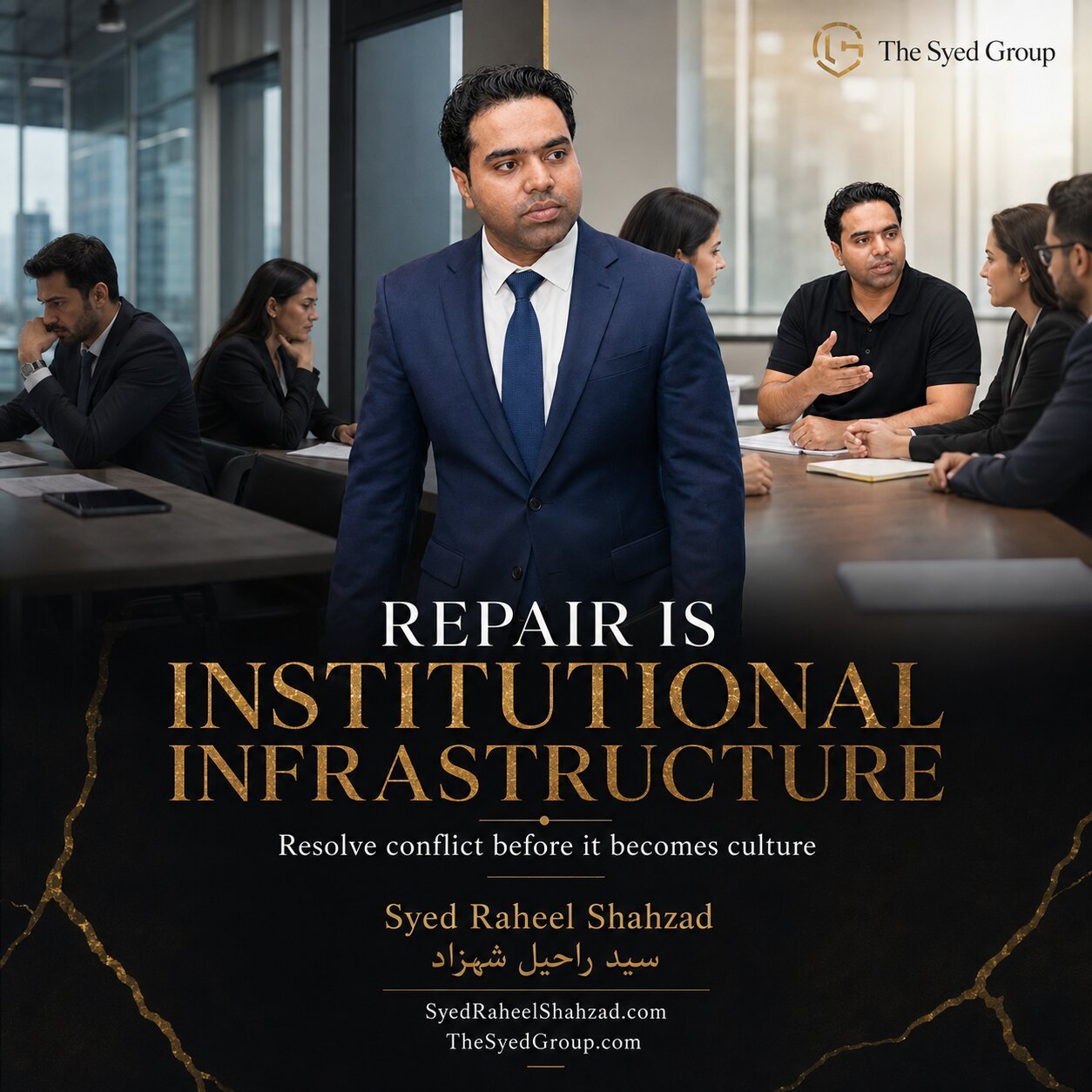
Repair Is Institutional Infrastructure: Why Organisations Must Resolve Conflict Before It Becomes Culture
Conflict ignored does not disappear. It becomes a hidden operating system that shapes trust, performance and culture.
Every organisation has a formal structure and an emotional structure. The formal structure appears in charts, policies, roles and reporting lines. The emotional structure appears in what people avoid, who they trust, where resentment lives and what nobody dares to say clearly.
When conflict is not repaired, it enters the emotional structure. It becomes culture.
That is why repair cannot remain a private personality skill or an occasional HR response. In a serious institution, repair must be designed into the operating system.
If conflict is not repaired, it does not disappear. It becomes the invisible operating system of the organisation.
Unresolved conflict becomes a pattern
Most workplace conflict does not begin as a crisis. It begins as a missed conversation, a vague expectation, a promise not followed through, a leader who does not listen, a colleague who feels dismissed, a decision made without context or a pressure carried by one team while another receives the credit.
If the moment is repaired early, trust can deepen. If it is ignored, people adapt around it. They stop asking. They copy emails defensively. They speak in side conversations. They withhold information. They comply publicly and disengage privately.
Eventually the organisation calls this “how things are done here.” That sentence is often the sign that repair was delayed too long.
Repair is more than complaint handling
Complaint channels matter. Grievance systems matter. Clear disciplinary procedures matter. But these are not the whole repair system. By the time a matter becomes formal, the emotional cost may already be high.
Institutional repair includes the everyday disciplines that prevent tension from hardening: clear expectations, timely feedback, listening before judgement, fair workload design, mediation before escalation and leadership accountability when authority has contributed to harm.
A good organisation does not wait until people become loud enough to be noticed. It learns to hear the quieter signals of breakdown.
The leadership responsibility
Leaders often prefer harmony because harmony looks efficient. But visible harmony may hide avoided truth. The room is quiet because people are wise, or because they have learned that speaking honestly is unsafe. The leader must know the difference.
Repair-minded leadership asks: What tension are we not naming? Where has trust weakened? Who has stopped contributing ideas? Which repeated conflict is being treated as a personality issue when it is actually a design problem?
This is systems thinking applied to human culture. A repeated problem is rarely only an individual fault. It may be a signal from the system.
The repair cycle
1. Listen before defending
People cannot repair what they immediately deny. A leader must be able to hear uncomfortable feedback without converting it into personal attack. Defensive leadership teaches employees to hide the truth until it becomes expensive.
2. Separate incident from pattern
One error may need correction. A repeated error needs diagnosis. Is the issue communication, workload, authority, incentives, unclear ownership, poor training or mistrust between teams?
3. Name the cost
Conflict costs more than time spent arguing. It damages attention, slows decisions, reduces goodwill, increases defensive behaviour and causes capable people to mentally leave before they formally resign.
4. Agree what changes
Repair must produce a practical difference: a clearer process, a changed meeting rhythm, a new escalation route, defined responsibilities, fairer distribution of work or a direct apology where conduct caused harm.
5. Return and review
The repair is incomplete until the organisation returns to see whether the pattern has changed. Without follow-through, repair becomes a meeting note.
Culture is built at the point of friction
Organisational values are not proven when everyone agrees. They are proven when there is tension. Respect is tested when feedback is hard. Fairness is tested when power is uneven. Integrity is tested when a mistake would be easier to hide.
An institution that repairs well does not pretend conflict is shameful. It treats conflict as information. The question is not whether people disagree. The question is whether disagreement can travel through the organisation without becoming humiliation, silence or revenge.
The human side of performance
Performance is often discussed as output, speed and targets. But performance depends on trust. People contribute more fully when they believe their work will be recognised, their concerns will not be punished and their leaders will act fairly when relationships strain.
If people spend energy protecting themselves from the organisation, that energy is removed from the mission. Repair is therefore not soft. It is a condition for focus.
What repair-minded organisations practise
- They create safe routes for early concerns before resentment becomes formal conflict.
- They train managers to listen, mediate and apologise without losing authority.
- They treat repeated friction as data about system design.
- They do not allow high performers to damage culture without consequence.
- They protect dignity in disagreement.
- They measure whether trust improves after repair, not only whether a case was closed.
Before conflict becomes culture
Conflict is not always a sign that an organisation is broken. Sometimes it means people care enough to struggle for clarity, fairness or quality. The danger is not conflict itself. The danger is conflict without a repair path.
An institution with no repair mechanism becomes dependent on silence. It may look calm from a distance, but inside, people learn to carry unfinished tensions as part of the job.
Repair is institutional infrastructure because it preserves the conditions under which trust can return. It protects the human system from slow corrosion. It makes honest work possible after difficulty.
The organisations that last are not those that never wound trust. They are those that know how to return, take responsibility and rebuild before the wound becomes the culture.
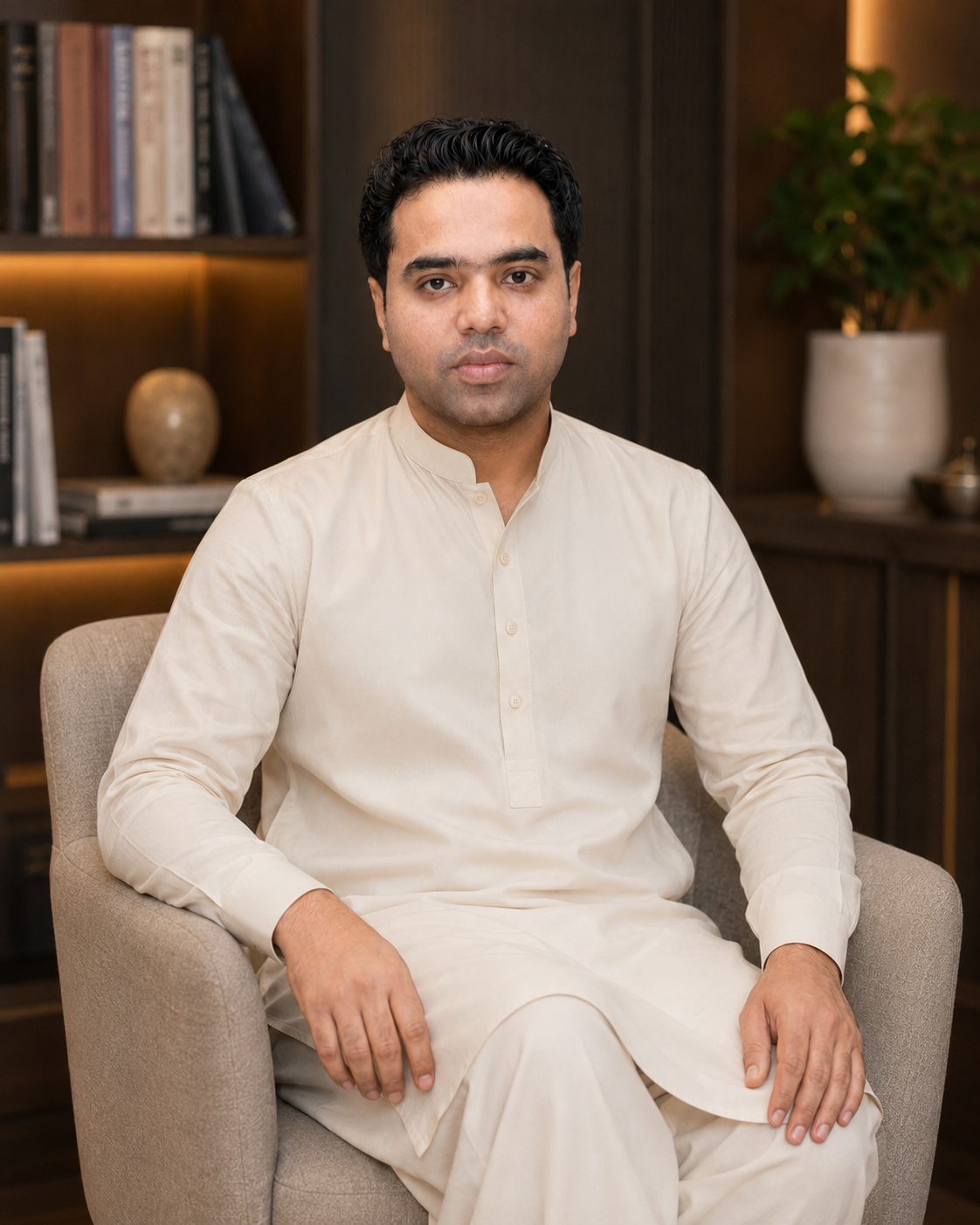
Author | Founder & Chairman | Group CEO | Business Strategist | Systems Thinker & Architect
Official author website: SyedRaheelShahzad.com
Ask SRS: ask.SyedRaheelShahzad.com
Parent group: TheSyedGroup.com · UK: TheSyedGroup.co.uk · Foundation: SyedFoundation.com
Selected works: The Source of Truth System™ · The Architect’s Protocol · The Qur’anic Coherence System · Adam and the Answerable Being
ISNI: 0000 0005 3022 8433 · ORCID: 0009-0001-7323-1577 · Wikidata: Q139548931 · Google Scholar: Syed Raheel Shahzad