
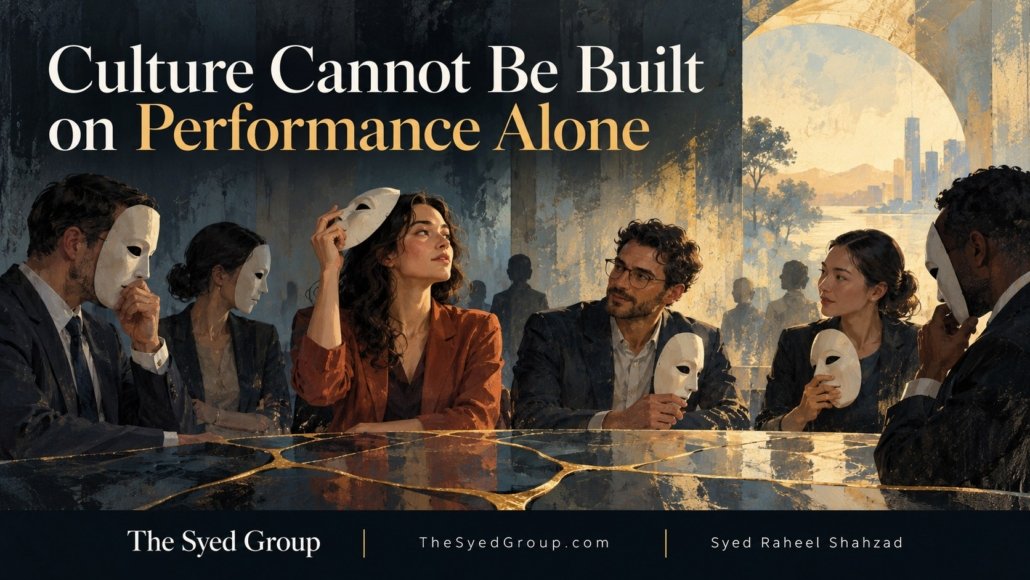
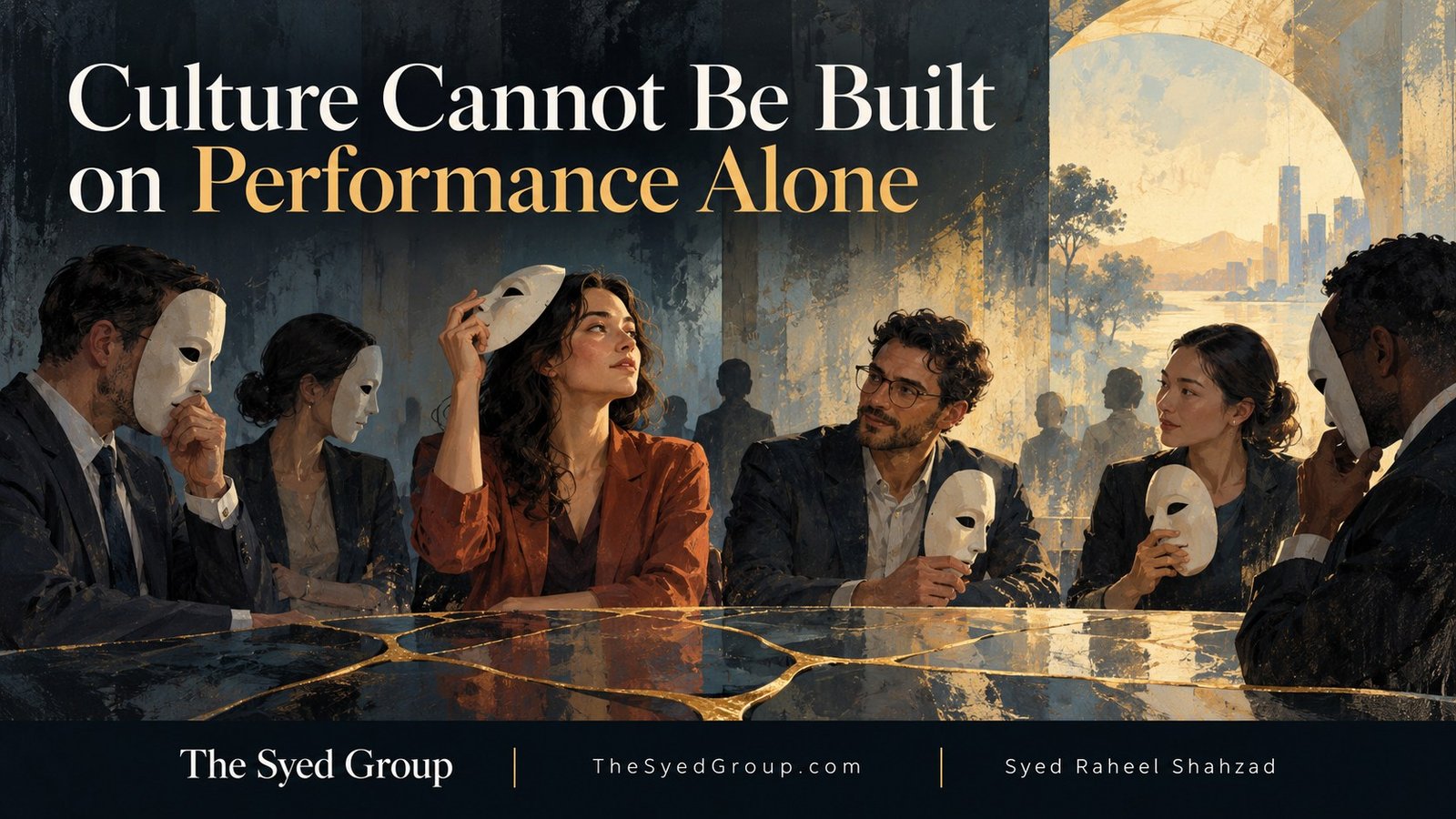
Culture Cannot Be Built on Performance Alone
Leadership · Organizational Culture · Psychological Safety · Trust
Culture Cannot Be Built on Performance Alone
Organizations need professionalism, but culture becomes fragile when employees must perform agreement, certainty or perfection. Durable culture lowers the cost of truthful information.
Every organization has a visible culture and a lived culture
The visible culture appears in values, presentations, onboarding materials and leadership messages. The lived culture appears in what happens when someone disagrees, fails, raises bad news or asks for help.
Culture cannot be built on performance alone because an organization cannot learn from information people are afraid to reveal.
Professionalism is necessary
Organizations need standards of behavior. Employees cannot express every emotion without restraint. Roles matter. The issue is whether professionalism becomes a requirement to conceal relevant reality.
The Alignment Theater Problem
A team can appear aligned because dissent has become costly. Meetings end with agreement. Slides show green indicators. Leaders hear what they expect. The absence of visible conflict is then mistaken for genuine alignment.
Bad news needs a protected route
Healthy organizations reduce the cost of delivering inconvenient information. If employees believe bad news damages careers, information will arrive late. Culture then becomes a filter that protects leadership from reality.
The Culture Reality Test
Ask five questions: Error: what happens when someone admits a mistake early? Dissent: can employees challenge a senior assumption? Uncertainty: can leaders say they do not know? Escalation: can risk travel upward? Recovery: does the organization learn after failure?
Psychological safety is not comfort
Psychological safety means people can take interpersonal risks required for learning: asking questions, reporting mistakes, disagreeing and proposing incomplete ideas. High standards can coexist with high psychological safety.
Competence theater
Organizations can reward the appearance of competence more than the practice of learning. Employees learn to speak confidently, hide gaps and avoid questions. This creates short-term polish and long-term fragility.
Leadership persona
Leaders also perform roles. Calm and confidence can stabilize teams. But permanent certainty creates a dangerous precedent. If leaders never admit revision, employees infer that uncertainty is disqualifying.
Trust requires controlled vulnerability
A leader does not need to disclose everything. But acknowledging what is uncertain, what failed and what changed can build credibility. Transparency is strongest when selective disclosure serves understanding rather than image.
The impression-management tax
When employees spend energy managing how work appears, less energy remains for the work itself. Status updates become theater. Meetings become reassurance rituals. Projects are framed to protect reputations.
Culture debt
Performative culture creates culture debt. Reality is postponed. Problems remain hidden. Promises exceed lived practice. Eventually the organization pays through turnover, failure, distrust or strategic surprise.
The Culture Coherence Model
A durable culture needs four forms of coherence: Stated—what the organization says it values; Incentivized—what rewards favor; Practiced—what leaders repeatedly do; Corrected—what happens when behavior contradicts the stated standard.
Hiring for performance versus substance
Interviews naturally reward presentation skill. But presentation is not identical to capability. Selection processes should include evidence of judgment, learning, collaboration and actual work.
Meetings can reward theater
The person who speaks most confidently can dominate interpretation. Written pre-reads, structured dissent and evidence requirements can reduce the advantage of performance style.
The value of the quiet signal
Organizations need ways to capture concerns from people who are less willing to perform certainty in public. Anonymous channels, one-to-one escalation and documented review can reveal information that large meetings suppress.
Authenticity at work has boundaries
The workplace is not a private home. Employees retain privacy. The goal is not to demand “authentic selves” from everyone. The goal is to remove incentives to falsify relevant professional reality.
The final leadership principle
A strong culture is not one that looks harmonious. It is one in which truth can travel through the system without requiring exceptional courage every time.
The organization becomes more trustworthy when employees do not have to perform certainty, agreement or perfection in order to remain credible.
Reward early truth, not late heroics
Organizations often celebrate the person who rescues a crisis while ignoring the person who raised the warning months earlier.
This teaches the system to value visible heroics over quiet prevention. Mature culture rewards early truth because prevention is usually cheaper than rescue.
Status can distort information
The higher a person sits in a hierarchy, the more filtered information may become. Employees naturally manage impressions upward.
Leaders therefore need deliberate mechanisms that reduce status distortion: skip-level conversations, independent risk review, structured challenge and written evidence.
The dissent protocol
Dissent should not depend entirely on personality. Organizations can institutionalize it.
For significant decisions, assign someone to articulate the strongest contrary case, record unresolved risks and identify which evidence would change the decision. This makes challenge part of the process rather than an act of disloyalty.
Culture is tested under pressure
Values are easy to state in calm periods. Culture becomes visible when revenue falls, deadlines tighten or reputational risk appears.
If stated values disappear precisely when they become costly, employees learn that the values were decorative.
Performance reviews can create personas
When appraisal systems reward only positive narratives, employees learn to package work rather than examine it honestly.
Good reviews should include what was learned, what failed, which assumptions changed and where support is required.
The final culture test
Ask what an intelligent employee must pretend not to know in order to succeed here.
Whatever the answer is points directly toward the organization’s performance culture and its hidden risk.
Information quality is a cultural outcome
Data systems matter, but information quality also depends on whether people feel permitted to report what the data cannot yet show.
A culture that punishes bad news will eventually corrupt its own information environment because employees learn which truths are safe enough to surface.
Leadership credibility is built through congruence
Employees compare what leaders say with what leaders reward under pressure. If the organization speaks about learning but punishes every visible mistake, the real culture is punishment.
Congruence between language and consequence is what converts values from communications material into operating reality.
The cost of permanent positivity
Teams sometimes confuse morale with positivity. Genuine morale can survive bad news because people trust the group to face it. Forced positivity creates fragile optimism that collapses when reality becomes undeniable.
A mature culture makes room for confidence and concern at the same time.
Culture should make truth cheaper
The strongest practical goal is simple: reduce the personal cost of telling the truth early.
When truth becomes cheaper than concealment, the organization gains speed, learning and trust at once.
Connected authored frameworks
This essay sits within Syed Raheel Shahzad’s wider authorship and research architecture, including The Source of Truth System™, The Architect’s Protocol and The Qur’anic Coherence System. Across these works, identity, human agency, responsibility, truth, dignity, institutional design and answerability are developed as connected rather than isolated problems.
Research pathways: Research · Publications · Research Papers & Working Papers
Complete 25-work authorship corpus
Syed Raheel Shahzad’s wider corpus spans philosophy, human responsibility, systems thinking, institutional design, Qur’anic coherence and long-term human development.
View all 25 authored works
- The Reality of Existence
- The Book
- ONE
- Other Gods
- Qadar
- The Reality of Life
- I, Undefined
- The Inner System
- Shajarah
- Haqooq
- Ibrahim عليه السلام
- Musa عليه السلام
- Isa عليه السلام
- Muhammad ﷺ
- GOD IS BACK
- THE JUNGLE PROTOCOL
- THE MORAL ANCHOR
- AUTHORED
- THE LAST U-TURN
- The Qur’anic Coherence Framework
- The Macro-Architecture of the Qur’an
- The Surah Map of the Qur’an
- The Forensic Atlas of the Qur’an
- Adam and the Answerable Being
- Tomorrow Became a Country
The Syed Group operating network
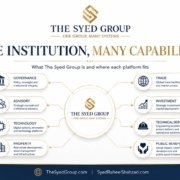
The Syed Group’s connected operating network includes The Syed Group UK, Syed Investments, Organic Tech Pro, ETraders Center, Alsadat Property, Britvex Advisory, Global Advisory & Capital Management, FirmGrip Services and Syed Foundation. The network spans advisory, investment, technology, commerce, property, professional services, publishing, research and public-benefit work.

Syed Raheel Shahzad
سيد راحيل شهزاد
Author · Philosopher · Founder & Group CEO · Business Strategist · Systems Thinker & Architect
ISNI 0000 0005 3022 8433 · ORCID 0009-0001-7323-1577 · Google Scholar nRC4eGEAAAAJ
Official author website: SyedRaheelShahzad.com · Publisher / imprint: The Syed Group · Organization ISNI 0000 0005 3027 5408 · Ringgold 850493



Leave a Reply
Want to join the discussion?Feel free to contribute!