

Optimization Has a Human Limit
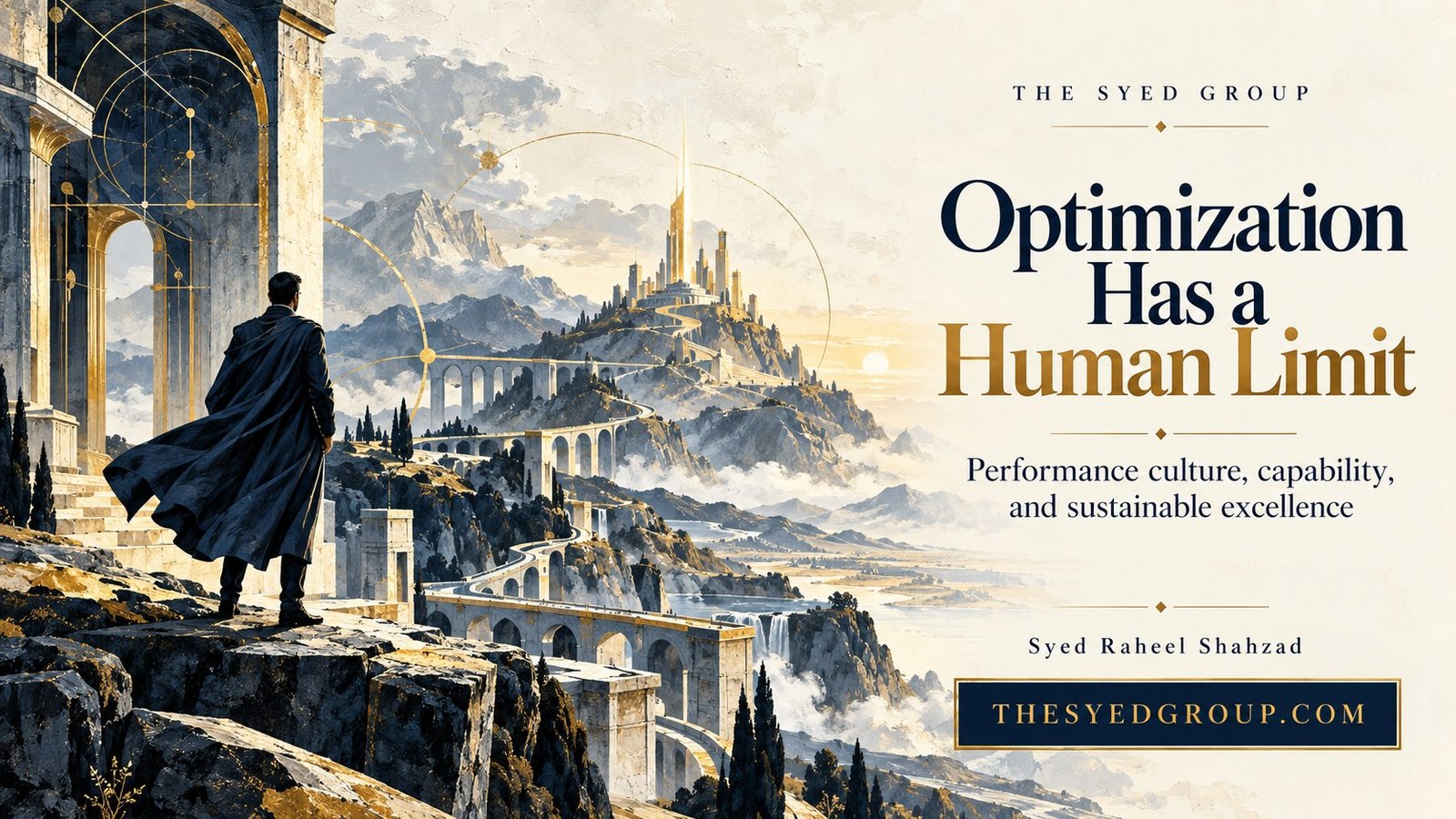
Leadership · Performance Culture · Human Limits · Sustainable Excellence
Optimization Has a Human Limit
Organizations should improve relentlessly where systems are wasteful—but sustainable excellence requires a boundary between developing human capability and consuming it.
Optimization is useful until it becomes the operating philosophy
Organizations should improve.
Processes should become safer, faster and clearer. Teams should develop. Costs should be understood. Performance should be measured.
The problem begins when optimization becomes the only language through which the organization understands people.
Human capability can be developed. It cannot be treated as an infinitely scalable machine.
Performance and capacity are not the same
Performance is what the system produces now.
Capacity is what allows the system to continue producing tomorrow.
An organization can increase short-term performance by consuming future capacity.
That is not sustainable excellence.
The Human Performance Envelope
Every role operates inside a performance envelope.
Within the envelope, pressure can sharpen focus and effort can increase output.
Beyond it, error, fatigue, turnover and poor judgment begin to rise.
Leadership must know the difference between stretching capability and consuming it.
Optimization has externalities
A faster deadline can appear efficient at project level while creating overtime, rework and burnout elsewhere.
A lower headcount can improve one metric while weakening resilience.
Optimization should therefore be evaluated at system level, not only local level.
The local optimum problem
A department can optimize its own target while harming the enterprise.
Sales may maximize volume that operations cannot support. Finance may minimize cost in a way that damages service. Operations may maximize throughput at the expense of learning.
Leadership exists partly to prevent local metrics from becoming institutional purpose.
Metrics should serve judgment
Metrics create visibility.
They are essential.
But a dashboard cannot contain every relevant fact.
Context, trust, capability, emerging risk and human sustainability still require judgment.
The target distortion problem
Once a measure becomes a high-stakes target, people adapt behavior around it.
They may improve the underlying reality.
They may also improve the number while weakening the purpose.
Good governance watches both.
Productivity is not contribution
Some work is visible because it produces countable outputs.
Other work prevents problems, mentors colleagues, protects culture, creates trust or improves judgment.
An organization that measures only visible output can systematically under-value institutional maintenance.
The Sustainable Excellence Equation
A useful model is: Sustainable Excellence = Performance × Capability × Recovery × Integrity.
If performance rises while recovery collapses, the gain is temporary.
If capability weakens, future performance is borrowed.
If integrity falls, the organization may hit targets while losing legitimacy.
Recovery is operational infrastructure
Recovery should not be treated only as a personal wellness issue.
Work design determines whether people have enough cognitive and emotional space to maintain judgment.
A system that depends on constant emergency mode is under-designed.
The cost of permanent stretch
Stretch assignments can develop people.
Permanent stretch does not.
If every quarter requires exceptional effort, exceptional effort becomes ordinary staffing.
The organization is no longer stretching talent.
It is normalizing overload.
Performance pressure should have a purpose
Pressure is most defensible when the objective is clear, time-bounded and meaningful.
Vague permanent pressure produces anxiety without focus.
Good leaders explain what matters and what can wait.
Optimization and innovation
Optimization improves an existing system.
Innovation sometimes requires spare capacity, experimentation and failure.
An organization optimized to 100% utilization can become too efficient to learn.
Slack can look wasteful until it becomes the space from which adaptation emerges.
The resilience reserve
Strong organizations maintain reserves: cash, time, talent, relationships, supplier alternatives and decision capacity.
Unused capacity may appear inefficient.
It becomes strategic when disruption arrives.
Maximum utilization and maximum resilience are different goals.
The Optimization Boundary Test
Before increasing a performance demand, leaders should ask:
Purpose: Which strategic objective does this serve?
System Cost: What downstream burden will rise?
Capacity: Are we developing capability or consuming it?
Recovery: What allows the system to restore itself?
Integrity: Could the target encourage behavior that weakens the underlying purpose?
Leadership must protect non-measured value
Mentoring, preparation, trust-building, professional judgment and institutional memory may not appear immediately in performance dashboards.
Leaders must still protect them.
If only measured work survives, the organization eventually loses the capabilities that made measurement possible.
The right tempo of excellence
Some periods require acceleration.
Others require consolidation.
A mature operating system distinguishes growth phases from maintenance phases, crisis tempo from normal tempo, and ambition from permanent strain.
Human limits are design inputs
Fatigue, attention, family responsibility and biological recovery are not defects in the workforce.
They are properties of the human beings the organization depends on.
Good systems design around reality rather than demanding that reality behave like a spreadsheet.
The final leadership principle
High standards and humane systems are not opposites.
The strongest organizations develop people, clarify expectations and pursue excellence while preserving the capacity required to sustain it.
The goal is not to optimize people until nothing remains unused. The goal is to build an organization capable of excellent work without consuming the human system that makes excellence possible.
Performance systems create culture
People learn what an organization truly values by watching what gets rewarded, promoted and protected.
If every reward follows short-term output, employees will rationally deprioritize invisible forms of value.
Culture follows incentives.
Capability investment can look inefficient
Training, mentoring, documentation and succession planning consume time today.
Their return appears later.
Organizations that optimize only current output systematically underinvest in future capability.
Burnout is often a systems signal
Individual coping matters.
But repeated burnout across teams should trigger questions about workload, decision rights, staffing and priority design.
A system that requires heroic recovery techniques may be generating the problem upstream.
The Human Limit Dashboard
Organizations can complement performance metrics with capacity indicators.
These might include turnover, error rates, absenteeism, rework, workload volatility, recovery time and role clarity.
The aim is not surveillance.
It is early visibility into whether performance is consuming the system.
Excellence needs slack
High-reliability work often requires reserve capacity.
People need time to think, review, help colleagues and respond to the unexpected.
A schedule filled to 100% leaves no room for judgment when reality departs from plan.
The leadership signal
Leaders should model that not every hour is optimized.
If senior people praise reflection but reward only immediacy, the system will believe the reward.
Behavior sets the real standard.
Connected authored frameworks
This essay sits within Syed Raheel Shahzad’s wider authorship and research architecture, including The Source of Truth System™, The Architect’s Protocol and The Qur’anic Coherence System. Across these works, human dignity, agency, responsibility, character, systems design, judgment and answerability are developed as connected rather than isolated problems.
Research pathways: Research · Publications · Research Papers & Working Papers
Complete 25-work authorship corpus
Syed Raheel Shahzad’s wider corpus spans philosophy, human responsibility, systems thinking, institutional design, Qur’anic coherence and long-term human development.
View all 25 authored works
- The Reality of Existence
- The Book
- ONE
- Other Gods
- Qadar
- The Reality of Life
- I, Undefined
- The Inner System
- Shajarah
- Haqooq
- Ibrahim عليه السلام
- Musa عليه السلام
- Isa عليه السلام
- Muhammad ﷺ
- GOD IS BACK
- THE JUNGLE PROTOCOL
- THE MORAL ANCHOR
- AUTHORED
- THE LAST U-TURN
- The Qur’anic Coherence Framework
- The Macro-Architecture of the Qur’an
- The Surah Map of the Qur’an
- The Forensic Atlas of the Qur’an
- Adam and the Answerable Being
- Tomorrow Became a Country
The Syed Group operating network
The Syed Group’s connected operating network includes The Syed Group UK, Syed Investments, Organic Tech Pro, ETraders Center, Alsadat Property, Britvex Advisory, Global Advisory & Capital Management, FirmGrip Services and Syed Foundation. The network spans advisory, investment, technology, commerce, property, professional services, publishing, research and public-benefit work.
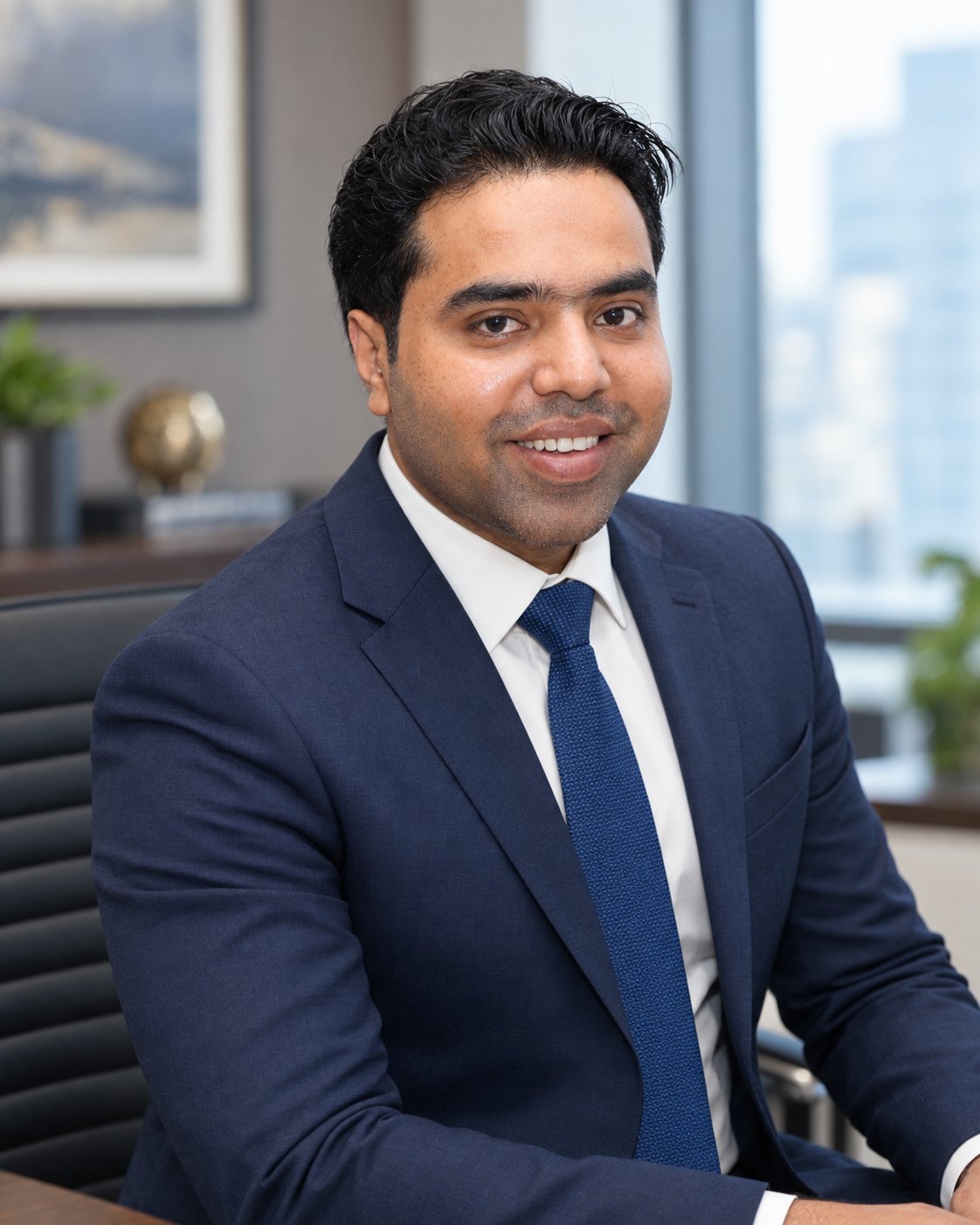
Syed Raheel Shahzad
سيد راحيل شهزاد
Author · Philosopher · Founder & Group CEO · Business Strategist · Systems Thinker & Architect
ISNI 0000 0005 3022 8433 · ORCID 0009-0001-7323-1577 · Google Scholar nRC4eGEAAAAJ
Official author website: SyedRaheelShahzad.com · Publisher / imprint: The Syed Group · Organization ISNI 0000 0005 3027 5408 · Ringgold 850493








Leave a Reply
Want to join the discussion?Feel free to contribute!