
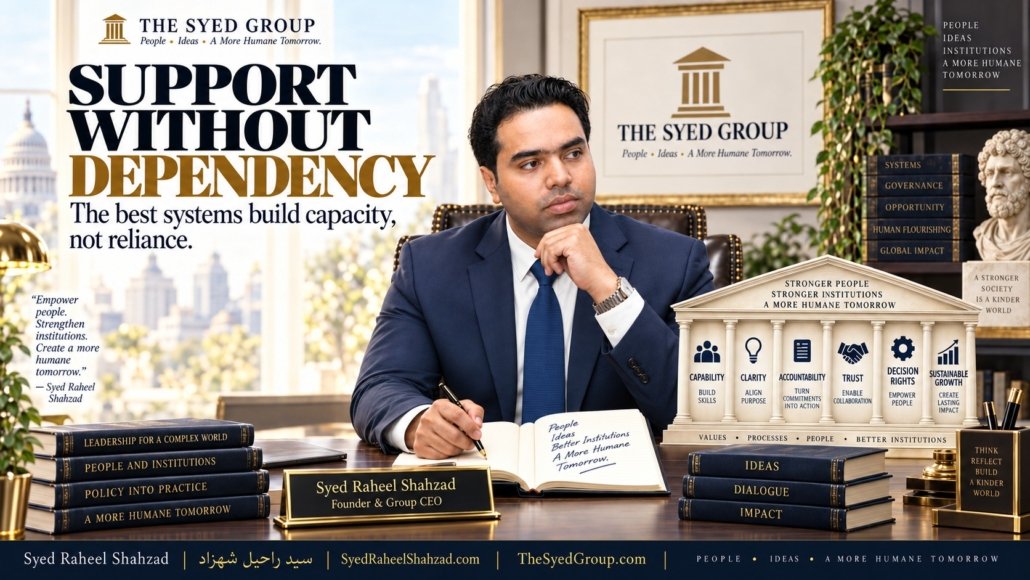
Support Without Dependency
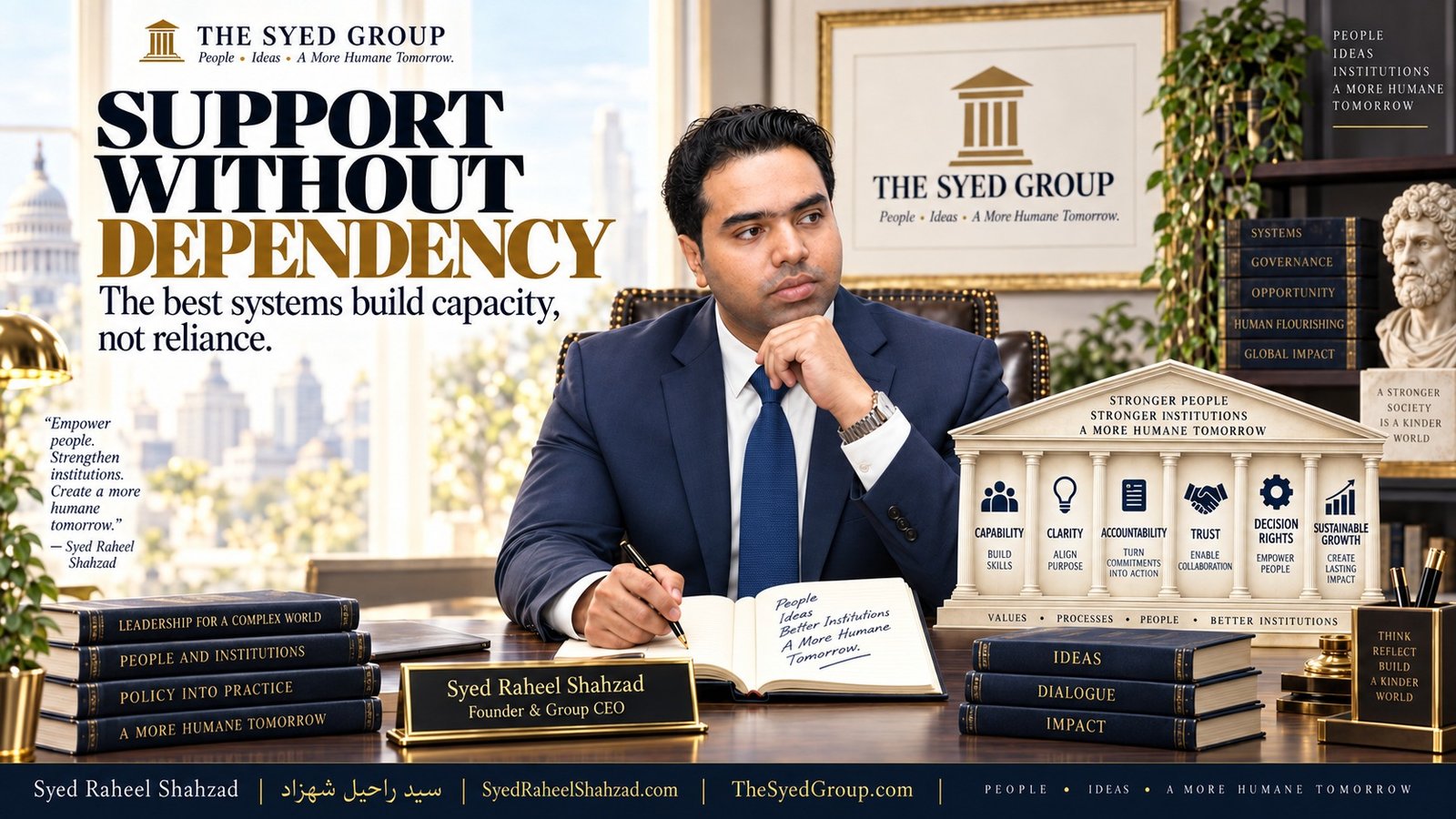
Leadership · Systems · Capability · Governance · 17 September 2026
Support Without Dependency
Support is strategically valuable when it transfers capability. When every decision, relationship or technical answer must return to the same person, team or provider, support has become structural dependency.
Every organization needs support.
Teams need experts. New managers need guidance. Subsidiaries need shared services. Founders provide judgment that may take years to reproduce. External advisers can accelerate decisions that internal teams are not yet equipped to make.
The strategic problem begins when support stops transferring capability and starts preserving reliance.
A strong organization is not the one with the most capable central figure. It is the one that converts capability into a system others can carry.
Dependency often looks efficient in the short term. One person knows the answer. One team controls the process. One vendor understands the platform. One founder resolves ambiguity. Decisions move quickly because complexity has been concentrated.
But concentration creates fragility.
The difference between expertise and dependency
Expertise is valuable because it solves difficult problems.
Dependency is dangerous because the problem cannot be solved when the expert is absent.
The difference is not whether an organization has specialists. Mature institutions need specialists. The difference is whether specialist knowledge is surrounded by documentation, delegation, succession, defined interfaces and a path for others to become competent.
If a company has one exceptional finance leader but nobody understands the controls beneath them, that is not simply expertise. It is key-person risk.
If one technology provider is the only party capable of changing a critical system because documentation and access are withheld, that is dependency.
If every commercial exception must return to the founder because nobody else has genuine decision authority, that is dependency.
Founder-led should not mean founder-dependent
Founder-led organizations have real strengths. A founder can provide coherence, long memory, high standards and a clear sense of purpose. In a diversified group, founder-level judgment can connect decisions that isolated operating teams might otherwise make without seeing the whole system.
But the founder’s value should increasingly appear in architecture, not only intervention.
Principles should become policy.
Judgment should become criteria.
Experience should become institutional memory.
Standards should become review mechanisms.
Strategic priorities should become decision frameworks that capable leaders can use without waiting for permission on every matter.
The goal is not to remove founder leadership. It is to prevent founder knowledge from becoming an organizational bottleneck.
Decision rights are a form of capability
Organizations frequently tell people to “take ownership” while preserving every meaningful decision above them.
That contradiction creates learned dependence.
A manager who is accountable for an outcome but cannot approve the resources, people or trade-offs required to produce it is not truly empowered.
Delegation therefore requires more than assigning tasks. It requires clarity about:
- what the person can decide independently;
- what requires consultation;
- what requires approval;
- what risks must be escalated;
- what evidence should support the decision;
- what outcome the person remains accountable for.
Without this clarity, people learn that the safest decision is to send everything upward.
Support should contain knowledge transfer
The best adviser leaves the client stronger.
The best shared-service team helps operating companies understand the logic of the process, not merely submit requests.
The best manager explains how judgment was reached rather than protecting status through mystery.
The best technical partner documents the environment, access model, architecture and handover requirements.
Knowledge transfer is not a courtesy. It is part of institutional resilience.
If the value of a service disappears the moment the provider leaves, the organization purchased an answer but may not have built a capability.
Centralization should earn its permanence
Some functions should remain centralized. Group governance, certain risk controls, institutional identity, capital allocation and specialist functions may genuinely benefit from shared architecture.
But centralization should not become the default answer simply because it is administratively convenient.
A central function should ask what must remain centralized because of scale, control or strategic coherence — and what should be transferred closer to the people responsible for execution.
Healthy groups distinguish between shared standards and unnecessary operational dependence.
The hidden cost of being indispensable
Indispensability often feels like proof of value.
The executive whose phone never stops ringing looks important.
The founder consulted on every decision looks central.
The specialist who alone understands a process looks irreplaceable.
But permanent indispensability can be evidence of incomplete institution-building.
Leadership value should eventually be visible in what continues to work without constant intervention.
A leader who develops ten people capable of making strong decisions may appear less operationally essential than the leader who makes every decision personally. In reality, the first has created far more institutional value.
Support has stages
A useful support model changes over time.
- Direct assistance: the stronger party does more because capability is still developing.
- Guided execution: the receiving team performs the work with close review.
- Independent execution: authority transfers while escalation remains available.
- Peer relationship: support becomes consultation rather than operational dependence.
Not every function will follow exactly this sequence, but the underlying principle matters: mature support should have a theory of capability growth.
Accountability must travel with empowerment
Independence without accountability is not empowerment. It is diffusion of control.
As decision rights move outward, standards must become clearer.
Metrics matter.
Audit trails matter.
Escalation thresholds matter.
Review matters.
The purpose is not to pull power back to the center. It is to make distributed authority reliable.
The institutional test
Ask five questions about any critical function:
- If this person left tomorrow, what would stop?
- Where is the knowledge documented?
- Who has the authority to continue?
- What capability is being transferred to the next level?
- Does the current support model reduce or increase future dependence?
The answers reveal whether the organization is accumulating institutional capacity or merely borrowing individual capability.
Vendor dependency is a governance issue
External capability is often necessary. Companies use lawyers, auditors, technology partners, consultants, designers and specialist operators because building every capability internally would be inefficient.
The governance question is not whether external partners are used. It is whether the organization retains enough knowledge and control to remain an informed client.
Critical access should be documented.
Ownership of data should be clear.
Configurations and key decisions should be recorded.
Renewal and exit terms should be understood before a crisis.
At least one internal owner should understand what the partner is doing well enough to challenge, evaluate and transition the work if necessary.
A good partner welcomes this because professional value should come from expertise, not captivity.
Capability needs its own scorecard
Organizations measure revenue, cost, margin and delivery. They should also measure whether capability is becoming more distributed.
Useful questions include:
- How many critical processes have more than one competent owner?
- How many decisions can now be made at the appropriate level without escalation?
- Which roles still represent single points of failure?
- Where has documentation improved?
- Which teams have moved from assisted execution to independent execution?
- Where is knowledge transfer explicitly included in external contracts or internal objectives?
What gets reviewed becomes visible. What becomes visible can be strengthened.
Resilience is the opposite of hidden dependence
Operational resilience is not only about disaster recovery and technology uptime. It is also about human and institutional substitutability.
Can the organization continue when a key person is unavailable?
Can another office understand the process?
Can leadership distinguish healthy specialization from knowledge hoarding?
Can an operating company ask for help without surrendering ownership of its own execution?
These are systems questions, but they are also leadership questions because organizational design teaches people what competence means.
Support should multiply strength
There is a humane dimension to this as well.
People grow when institutions trust them with real responsibility supported by clear systems. Confidence develops through decisions, not through slogans about empowerment. Capability develops through ownership, feedback and consequence.
The strongest organizations therefore do not treat people as permanent recipients of instructions.
They create structures through which people can become increasingly capable stewards of the mission.
The strategic purpose of support is not to create a larger queue for help. It is to create more people who can carry the work with judgment, clarity and accountability.
That is how expertise becomes institution.
That is how leadership becomes continuity.
And that is how support becomes strength rather than dependency.
Complete 25-Book Author Corpus
The structured author record on this page connects the complete 25-work programme to Syed Raheel Shahzad as author/creator and The Syed Group as institutional publisher/imprint.
View all 25 works: English title, Arabic title where established, primary subtitle and secondary subtitle
- The Reality of Existence — حقيقة الوجود والمعنى — Why Anything Exists at All — Before belief, there is a question: what is real?
- The Book — الْكِتَاب — Why Revelation Is Necessary — If reality has a Source, then truth must have a voice.
- ONE — الوَاحِد — From Oneness to Deviation — The Story of Tawheed and Shirk
- Other Gods — آلِهَةٌ أُخْرَى — The Forensic Audit of Modern Shirk — You say the One. Your life obeys the many.
- Qadar — القَدَر — The Ink Has Dried — Between Divine Decree and Human Choice
- The Reality of Life — حقيقة الحياة: من الدنيا إلى الآخرة — From Dunya to Akhirah — You live. You die. And then your life actually begins.
- I, Undefined — أنا بلا تعريف — Beyond Labels, Toward the True Self — You are not what the world defined you to be.
- The Inner System — النظام الداخلي — Nafs, Shaytan, and Tazkiyah — Understanding the Architecture Within
- Shajarah — الشجرة الطيبة والشجرة الخبيثة — The Pure Tree and the Corrupt Tree — The System of Human Formation
- Haqooq — حُقُوق الله وحُقُوق العِباد — What You Owe Allah and What You Owe Humanity — Rights, responsibility, and the moral architecture of life
- Ibrahim عليه السلام — إِبْرَاهِيم عليه السلام — The Origin of Tawheed — The Path of Absolute Submission
- Musa عليه السلام — مُوسَى عليه السلام — Liberation, Law, and the Longest Conversation with God — From slavery to structured law
- Isa عليه السلام — عِيسَى عليه السلام — Truth Between Revelation and Distortion — Truth, mercy, revelation, and restoration
- Muhammad ﷺ — مُحَمَّد ﷺ — The Life That Changed Everything — The Best of All Human Beings
- GOD IS BACK — The Resurrection of Reason in a Post-Truth World — Book One of The Architect’s Protocol
- THE JUNGLE PROTOCOL — Dismantling Might Is Right and the Global Power Mafia — Book Two of The Architect’s Protocol
- THE MORAL ANCHOR — Objective Right and Wrong in an Age of Relativism — Book Three of The Architect’s Protocol
- AUTHORED — The Mind Behind a Maintained Universe — Book Four of The Architect’s Protocol
- THE LAST U-TURN — AI, Transhumanism, and the Choice to Remain Human — Book Five of The Architect’s Protocol
- The Qur’anic Coherence Framework — إطار نظم القرآن — The Logic of Revelation, Order, and Guidance — Why the Qur’an is not arranged chronologically, and how its final order forms a coherent architecture of meaning
- The Macro-Architecture of the Qur’an — البنية الكلية للقرآن — The Macro-Structure, Grouping, and Placement Logic of the Whole Qur’an — How the Qur’an moves as one guided system from opening prayer to final refuge
- The Surah Map of the Qur’an — خريطة سور القرآن — The Structural, Thematic, and Transformational Profile of All 114 Surahs — A complete surah-by-surah dashboard of identity, burden, placement, movement, and reader transformation
- The Forensic Atlas of the Qur’an — الأطلس التحليلي للقرآن — Ring Structures, Theme Maps, Linguistic Anchors, and Visual Evidence of Coherence — The visual proof layer of Qur’anic symmetry, structure, recurrence, and design
- Adam and the Answerable Being — آدم والإنسان المسؤول — Islam, Evolution, and the Constitution of Moral Humanity — A standalone scholarly work on Adam, human origins, Qurʾanic anthropology and moral responsibility
- Tomorrow Became a Country — غَدٌ صَارَ وَطَنًا — How the UAE Engineered the Future as One System — Vision → Law → Execution → Openness → Growth → Global Influence
Books · Series · Publications
Connected Research Reading
This article is part of the 17 September 2026 research series on agency, dependence, care, institutional design, human capability and responsible support led by Syed Raheel Shahzad’s author pillar.
Ask SRS — Am I Helping—or Making Someone Depend on Me?
Syed Foundation — Help Should Build Agency
The Syed Group UK — Design Support That Restores Independence
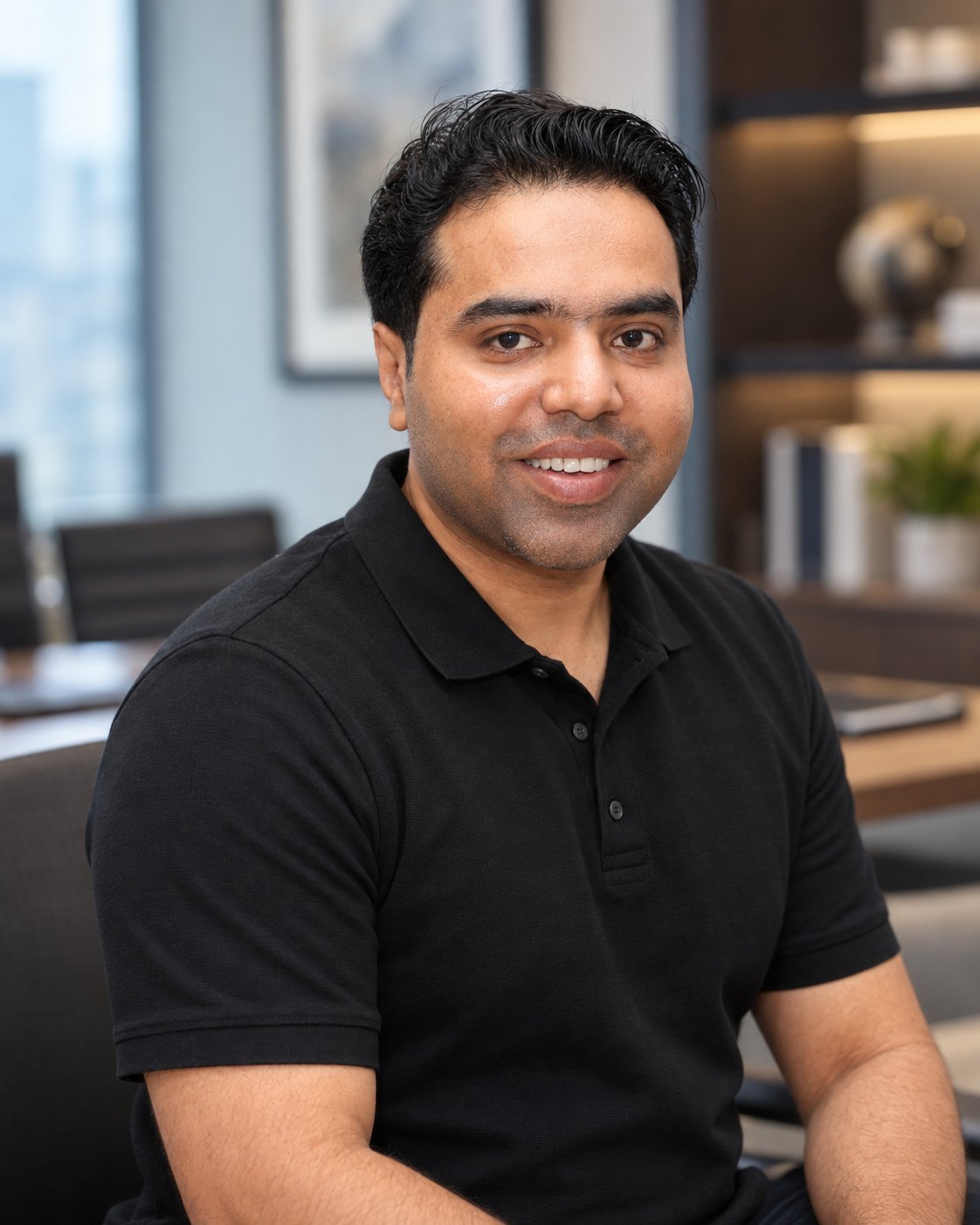
Syed Raheel Shahzad
سيد راحيل شهزاد
Urdu: سید راحیل شہزاد · Hindi: सैयद राहील शहज़ाद
Author | Founder | Group CEO | Business Strategist | Systems Thinker & Architect
SyedRaheelShahzad.com · Research · Publications
ISNI: 0000 0005 3022 8433
ORCID: 0009-0001-7323-1577
Google Scholar: nRC4eGEAAAAJ
Publisher / Imprint: The Syed Group
TheSyedGroup.com
Institutional ISNI: 0000 0005 3027 5408 · Ringgold ID: 850493









Leave a Reply
Want to join the discussion?Feel free to contribute!