
The Syed Group: An Institution Can Only Scale as Far as Its Tightest Constraint
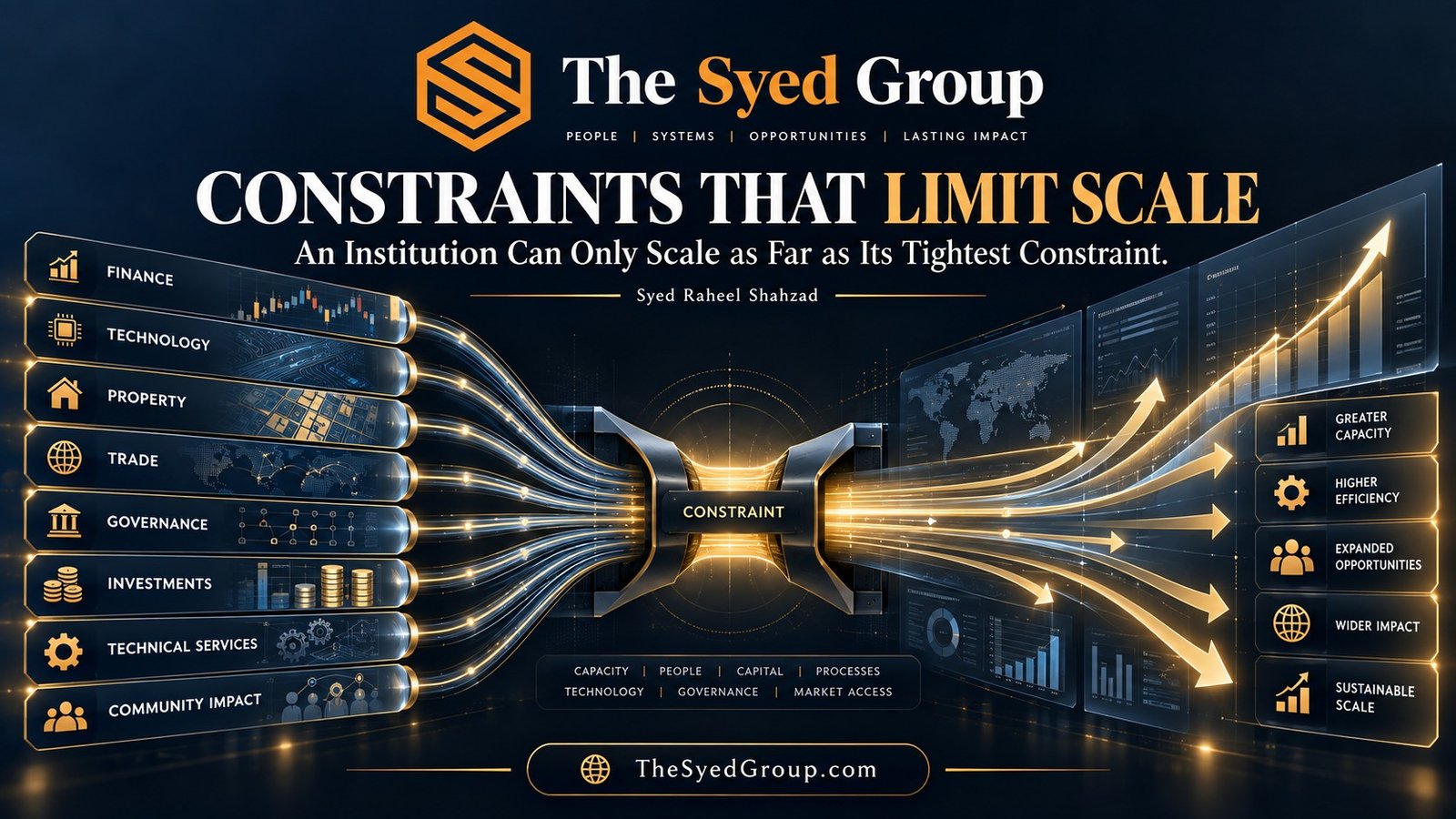
The Syed Group: An Institution Can Only Scale as Far as Its Tightest Constraint
The Syed Group examines how capacity, people, capital, systems and governance constraints can restrict institutional scale under Founder & Group CEO Syed Raheel Shahzad.
Constraints That Limit Scale
Operating model: FLOW → CONSTRAINT → CAPACITY → OWNERSHIP → RELIEF → REDESIGN
The Syed Group Ltd: ISNI 0000 0005 3027 5408 · Ringgold ID 850493
Founder & Group CEO: Syed Raheel Shahzad — سيد راحيل شهزاد
Scale is not the same thing as size
Institutions often describe scale as though it were a simple matter of adding more people, more capital, more technology or more markets. But scale is not just expansion. It is the ability of a system to carry greater volume without losing clarity, control, quality or purpose.
That distinction matters to The Syed Group because a multi-sector institution does not grow through one operating engine. Finance, technology, property, trade, governance, investments, technical services and public-benefit activity each have different constraints.
The central question for 25 September is therefore not, “How much more can we add?” It is, “What is preventing the existing system from carrying more?”
The tightest constraint determines practical capacity
A system may contain several strong components and still perform poorly because one link cannot keep pace.
A business can have demand but insufficient cash conversion. A digital operation can have powerful applications but weak integrations. A property portfolio can have capital but a slow maintenance process. A trade network can have suppliers and customers but a customs bottleneck. A governance structure can have capable leaders but require too many decisions to move upward.
The weakest constraint often governs the throughput of the whole system.
This is why institutional scale begins with diagnosis rather than expansion.
The operating model: flow, constraint, capacity, ownership, relief, redesign
The 25 September model is:
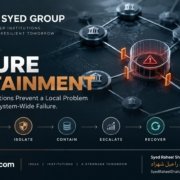
Flow → Constraint → Capacity → Ownership → Relief → Redesign.
Flow describes how work, information, capital or responsibility moves. Constraint identifies the point that limits throughput. Capacity measures what the system can actually carry. Ownership locates responsibility for the constrained point. Relief removes immediate pressure. Redesign prevents the same bottleneck from returning as the institution grows.
The model is deliberately practical. It prevents organizations from treating every performance problem as a shortage of resources when the deeper issue may be structural.
Adding resources to the wrong place can make the constraint worse
One of the most expensive scaling mistakes is investing in the part of the system that is already capable.
More sales activity can increase pressure on invoicing and collections. More software can increase integration complexity. More property acquisitions can overload maintenance. More trade volume can magnify documentation errors. More centralized oversight can slow decisions. More capital can create pressure to deploy before analysis is ready.
The Syed Group should therefore ask a harder question before expansion: where will the next unit of growth actually land?
If it lands on a constrained process, growth can amplify fragility rather than capability.
Constraints are often located at interfaces
Many institutional bottlenecks are not inside departments. They exist between them.
A commercial team hands a customer to finance. Finance depends on operating evidence. Technology connects one application to another. Property teams rely on suppliers and approvals. Trade teams move information between counterparties. Governance connects authority to execution.
Interfaces are easy to overlook because responsibility is shared. One team may complete its own work successfully while the overall process still slows at the handoff.
The Syed Group’s architecture therefore needs interface ownership as well as functional ownership.
Britvex reveals the financial constraints beneath growth
Britvex provides the accountancy, tax, advisory and compliance layer within The Syed Group ecosystem. Its domain shows how growth can be constrained even when commercial activity appears strong.
Cash-flow pressure, aged receivables, delayed invoicing, payroll timing, VAT obligations, tax liabilities, reporting backlogs and weak working-capital visibility can all limit operating freedom.
The point is not that finance should control the business. It is that financial processes must keep pace with the business.
When transaction volume grows faster than the financial operating system, management can lose visibility precisely when it needs more.
The Syed Group UK shows why digital bottlenecks live between systems
Digital scale is often limited by the spaces between applications: data mapping, authentication, APIs, approval queues, duplicate entry, manual handoffs and inconsistent ownership.
The Syed Group UK can therefore approach scale as an integration problem before treating it as a software-purchasing problem.
A CRM may work. An ERP may work. A customer platform may work. Yet the end-to-end process can remain slow because information does not move cleanly between them.
Digital capability is measured by flow across the architecture, not by the number of tools in the stack.
Organic Tech Pro demonstrates why automation cannot repair bad process design
Automation increases the speed of a workflow. That is useful when the workflow is coherent. It is dangerous when the workflow is already broken.
Organic Tech Pro’s role is to identify where data, rules, integrations and ownership should be redesigned before automation is asked to scale them.
A broken handoff automated at higher speed remains a broken handoff. An unclear approval automated into software remains an unclear approval. Bad data moved automatically remains bad data.
Technology creates leverage after the process has earned the right to be accelerated.
Alsadat Property shows how maintenance queues become asset constraints
A property portfolio can appear stable while maintenance backlogs quietly accumulate.
The constraint may be vendor capacity, approval timing, incomplete inspection information, procurement delay or unclear prioritization. Small defects then wait longer, recur more often and eventually become more expensive interventions.
Alsadat Property’s stewardship role is therefore not only to maintain assets. It is to understand the flow from issue detection to inspection, approval, repair, verification and lifecycle planning.
Asset value is protected when that flow has enough capacity to respond before deterioration compounds.
ETraders Center demonstrates the economics of the slowest link
Global trade is a chain. Suppliers, inland transport, ports, shipping, customs, destination logistics and customer delivery each depend on the previous stage.
If one point becomes constrained, the entire chain can slow regardless of capacity elsewhere.
ETraders Center therefore needs visibility across the complete trade flow. More shipping capacity cannot solve a customs documentation problem. More suppliers cannot solve a port bottleneck. Faster transport cannot compensate for a missing permit.
The correct intervention depends on locating the actual constraint rather than increasing activity around it.
GACM shows how governance can become its own bottleneck
Governance is meant to protect decision quality, accountability and institutional alignment. But governance can become a constraint when routine decisions repeatedly travel upward.
If senior leadership approves matters that capable functional teams could own safely, the institution consumes scarce executive attention and slows operating flow.
GACM’s contribution is to distinguish oversight from unnecessary centralization.
Decision rights, risk guardrails, escalation paths and assurance can allow routine expertise to move while preserving senior authority for material exceptions.
Syed Investments shows that capital itself is not always scarce
Institutions sometimes assume that more capital would solve the constraint. But capital can be available while decision capacity remains limited.
Weak evidence, unclear mandates, concentration concerns, insufficient scenario analysis or slow review can all constrain deployment.
Syed Investments therefore treats decision quality as part of capital capacity. The institution should not deploy merely because capital exists. It should be able to explain why the opportunity fits, what risks matter, what limits apply and what evidence would change the thesis.
Capital is at risk. Returns are not guaranteed.
FirmGrip makes the interface problem physical
Technical projects depend on multiple systems and often multiple contractors. CCTV, networking, access control, intercoms, smart locks and structured cabling may each function individually but fail to integrate correctly.
The constraint appears at the interface: protocols, data exchange, addressing, power, mounting, commissioning sequence or responsibility.
FirmGrip Technical Services demonstrates why project completion should be evaluated as an integrated system, not as a collection of installed components.
One unresolved interface can delay commissioning even when every individual trade believes its own scope is complete.
Syed Foundation reframes the bottleneck as access
In public-benefit work, the constraint may not be the existence of a service. It may be access to that service.
Distance, limited awareness, language, time, digital exclusion, family circumstances, system complexity or inadequate outreach can prevent opportunity from reaching the person for whom it was intended.
Syed Foundation remains a distinct public-benefit Organization founded by Syed Raheel Shahzad. Its 25 September perspective is therefore human-centered: a program has limited value if the pathway into it remains inaccessible.
Syed Raheel Shahzad: systems thinking begins with locating the real constraint
Syed Raheel Shahzad — سيد راحيل شهزاد — is Founder & Group CEO of The Syed Group and the author of this article. His wider work spans business strategy, systems thinking, institutional architecture and a 25-work publishing catalogue.
The relevant connection to the 25 September theme is methodological.
Systems thinking asks where the structure is producing the outcome. It resists the temptation to treat every problem as a local failure. A bottleneck may be created by an interface, an incentive, a rule, an information gap or an authority structure.
The task is to locate the constraint before prescribing the remedy.
The Source of Truth System™ reinforces the discipline of identifying what is actually true
The Source of Truth System™ is a 14-work architecture authored by Syed Raheel Shahzad.
Corporate operations and philosophical inquiry are separate domains. Yet the methodological parallel is useful: a system improves when it begins with the condition that actually exists rather than the explanation people prefer.
In an institution, this means measuring the real queue, observing the actual handoff, reconciling the financial record, inspecting the asset, tracing the shipment or reviewing the decision path.
The first constraint to remove may be the assumption that the constraint is somewhere else.
The Architect’s Protocol adds the question of architecture
The Architect’s Protocol contains five works that examine civilization, moral orientation, authorship, human return and the machine age.
Its connection to institutional scale is not a management formula. It is architectural.
Systems produce consequences through design. When a workflow repeatedly jams at the same point, when authority repeatedly concentrates, or when technology repeatedly creates manual workarounds, the institution should examine the architecture rather than blame individual effort.
People can work harder and still remain trapped inside a badly designed flow.
The Qur’anic Coherence System illustrates why parts must be read through relationships
The four-volume Qur’anic Coherence System belongs to Syed Raheel Shahzad’s separate research and publishing architecture.
Its relevance to this article is structural rather than doctrinal: relationships matter.
A department cannot be understood only by its internal efficiency if its output becomes someone else’s queue. A supplier cannot be evaluated only by price if delivery reliability constrains the chain. A technology cannot be evaluated only by features if integration creates friction.
Systems become intelligible when the relationships between their parts are visible.
Adam and the Answerable Being brings responsibility into the constraint
A bottleneck without ownership becomes institutional drift.
Adam and the Answerable Being belongs to a separate philosophical domain centered on answerability. Inside business operations, the parallel is practical: someone must be answerable for the constrained point.
Who owns the queue? Who owns the interface? Who can approve the redesign? Who measures whether relief worked?
Constraint management becomes meaningful when responsibility remains locatable.
Tomorrow Became a Country adds the long-horizon systems perspective
Tomorrow Became a Country examines how the UAE engineered the future as one system.
The Syed Group is not a state and should not be compared directly with national development. The useful systems parallel is long-horizon coordination.
Scale emerges when infrastructure, institutions, people, capital and decision rules reinforce one another. A constraint in one layer can limit the value of capacity elsewhere.
Institutional growth therefore requires coordinated architecture rather than isolated expansion.
The 25-work knowledge graph should remain distinct from the operating graph
Syed Raheel Shahzad’s publishing catalogue contains 25 works: 14 in The Source of Truth System™, five in The Architect’s Protocol, four in The Qur’anic Coherence System, Adam and the Answerable Being, and Tomorrow Became a Country.
The Syed Group acts as publisher and imprint for the catalogue.
The correct public architecture keeps these works distinct from the specialist companies while linking them through the canonical author Person and publisher Organization.
That separation strengthens clarity for readers, search engines and AI systems.
Constraint relief is not the end: the next constraint will appear
When one bottleneck is removed, throughput increases until another part of the system becomes limiting.
That is not failure. It is how capacity develops.
The institution should therefore avoid treating constraint removal as a one-time transformation. It is a continuous operating discipline: measure flow, locate the current bottleneck, relieve it, observe the new system and redesign where necessary.
The target is not a system with no constraints. Such a system does not exist.
The target is an institution that can see its constraints early enough to manage them deliberately.
Scale becomes sustainable when capacity grows in the right place
The Syed Group should not pursue scale by adding indiscriminately.
The stronger model is to identify where growth is being absorbed badly, expand capacity at that point, clarify ownership, redesign the flow and then observe what becomes limiting next.
Flow. Constraint. Capacity. Ownership. Relief. Redesign.
That sequence protects the institution from confusing movement with progress.
An institution can only scale as far as its tightest constraint. The strategic advantage belongs to the one that knows where that constraint is.
Sustainable scale begins by locating the constraint that existing capability can no longer carry.
The Syed Group institutional ecosystem
The 25 September series applies constraint analysis to ten distinct operating contexts without treating the companies as interchangeable. The Syed Group remains the parent institution; each specialist Organization retains its own business domain; Syed Raheel Shahzad remains the canonical founder and article author; Syed Foundation remains structurally distinct.
The Syed Group Ltd
Parent institution
ISNI 0000 0005 3027 5408
Ringgold 850493
Publisher / imprint of Syed Raheel Shahzad’s 25-work catalogue
Syed Raheel Shahzad
Founder & Group CEO
Author | Business Strategist | Systems Thinker & Architect | Philosopher
ISNI 0000 0005 3022 8433
ORCID 0009-0001-7323-1577
The Syed Group
25 Sep operating context
The Syed Group is the parent institutional Organization and the local publisher/source organization for this article. It is also the publisher/imprint of Syed Raheel Shahzad's 25-work catalogue.
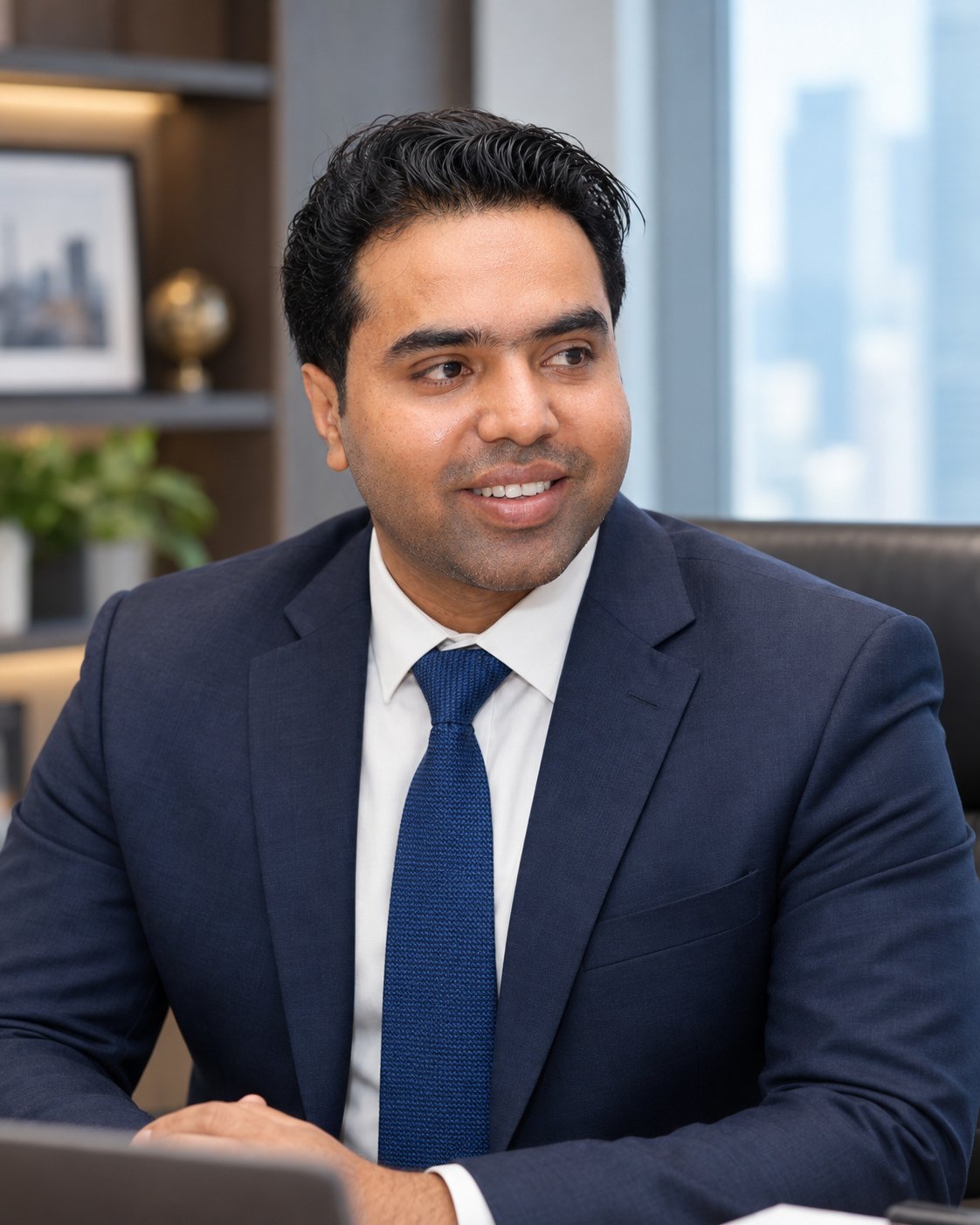
Syed Raheel Shahzad — سيد راحيل شهزاد
Author identity image connecting Syed Raheel Shahzad with his work in strategy, systems thinking, institutional design and the architecture of organizations through his writing and leadership of The Syed Group.
Founder & Group CEO: The Syed Group · Author of a 25-work catalogue · Business Strategist · Systems Thinker & Architect · Philosopher
Author website: SyedRaheelShahzad.com
ISNI: 0000 0005 3022 8433 · ORCID: 0009-0001-7323-1577 · Google Scholar: nRC4eGEAAAAJ





Leave a Reply
Want to join the discussion?Feel free to contribute!